
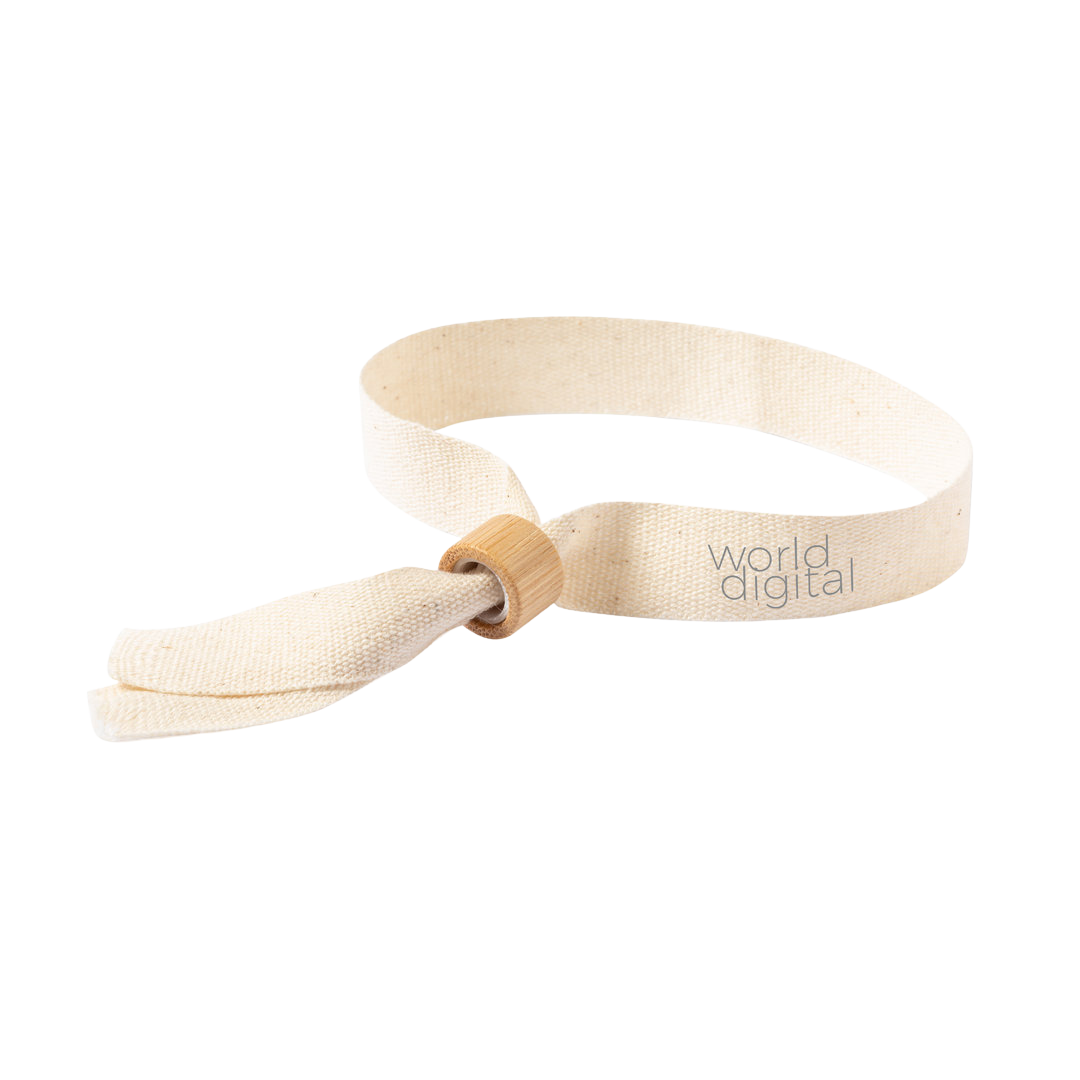
There is a specific and slightly humiliating way that sustainable merchandise fails. It is not that somebody checks a certificate. It is that somebody picks the item up, turns it over, and finds a plastic clip on the end of a cotton strap.
Nothing else about the order matters after that. The claim is not disproved — it is undermined, visibly, by the object itself, in front of the person you were trying to persuade.
Three claims, routinely confused
Most eco briefs arrive as a single word — “sustainable”, “eco”, “green” — and that word covers three claims that are genuinely different, cost differently and are checked differently.
| Claim | What it means | What it costs | Weak point |
|---|---|---|---|
| Recycled content | The material was something else first. rPET is spun from used bottles. | Cents. The easiest swap available. | It is still plastic, and someone will say so. |
| Natural material | Plant or animal fibre: cotton, bamboo, cork, felt. | Noticeably more, and the range is wide. | Natural is not automatically low-impact, and cotton in particular is water-intensive. |
| Plastic-free | Nothing petroleum-based leaves the event: corn starch fibre, cardboard, washable paper, seed paper. | Varies hugely — cardboard is the cheapest lanyard there is; seed paper is among the dearest. | Durability, and the fittings. |
Deciding which one you are actually making is most of the work. “We want something eco” produces a quotation with three different answers in it; “we want no virgin plastic leaving the site” produces one.
The fittings problem, in detail
This is the part that gets skipped, and it is the part people notice.
A lanyard is a strap plus a hook plus, usually, a safety breakaway and a slider. A wristband is a band plus a closure. In both cases the material story is told by the largest component and undermined by the smallest one. A recycled strap with a virgin plastic breakaway still puts new plastic into every single unit, and the clip is at eye level when somebody looks at their own badge.
The fixes are cheap and they exist:
- Specify the breakaway material. A wheat straw breakaway is moulded from an agricultural byproduct and releases under load exactly as the plastic clip does; metal and wooden versions run on the natural material and plastic-free straps. The clip is a small part and it sits at eye level.
- Metal crimp instead of a plastic one-way lock on fabric wristbands. It is more secure and it looks better, so this one is an upgrade in three directions at once.
- Plain metal or wooden hook instead of a nickel-plated one, and no plastic slider.
None of these are expensive. They are simply not on the default specification, which means they only appear if you ask.
Which material for which event
Volume giveaway, budget-constrained. Recycled. rPET behaves identically to standard polyester, so nothing about the design or the print has to change, and the price difference is small enough to disappear into rounding. It is the swap with the best ratio of claim to disruption.
The material has to be visible from across a room. Natural. Unbleached cotton next to a shiny polyester strap reads instantly, without a word of explanation — which is the whole point when the audience is looking rather than reading. Bamboo is the most comfortable of the natural fibres and the one people keep wearing; cork looks designed rather than worthy.
Zero-waste event, and the claim will be audited. Plastic-free. Corn starch PLA fibre behaves like polyester in use and is industrially compostable — it needs a commercial composting facility, not a garden heap. Cardboard is unmistakable and cheap. Seed paper is planted afterwards, which turns the disposal question into the part of the event people photograph.
Three claims that do not survive contact
“Biodegradable” without a condition. Almost everything biodegrades eventually, under some conditions. The useful version names the conditions: home compostable, industrially compostable, or degrades in soil. Without that, it is a word rather than a claim.
A recycled percentage nobody can document. Ask for the mill documentation at quotation stage, before it appears on printed material. Recycled-content percentages are exactly the kind of claim that gets challenged, and the challenge always arrives after the print run.
An eco item nobody wants. The most sustainable merchandise is merchandise that gets used. An item used for years usually beats a recycled item binned on Monday, and no certificate changes thats that arithmetic. If the object is not good, the material is not the problem.
The order of operations
- Decide which of the three claims you are making. One of them, specifically.
- Choose the material that carries it. Recycled, natural, or plastic-free.
- Specify the fittings in the same breath. This is the step that gets skipped and the one that gets noticed.
- Ask for the documentation before the artwork. Not after.
- Check the item is good enough to keep. If it is not, start again — the material cannot rescue it.
Where to look
Lanyards: recycled rPET, natural materials, plastic-free and plantable. Wristbands: eco fabric in natural and recycled fibres, cork, seed paper. Bags: RPET totes and drawstring bags. Cups and bottles: reusable event cups and vacuum insulated bottles — both of which replace something disposable, which is the strongest sustainability argument there is.