
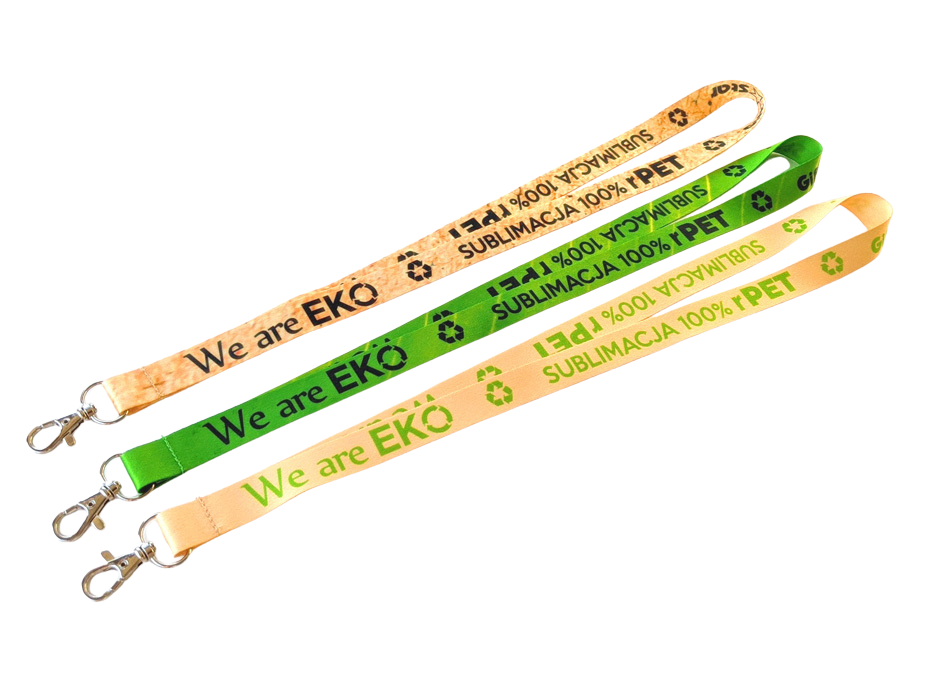
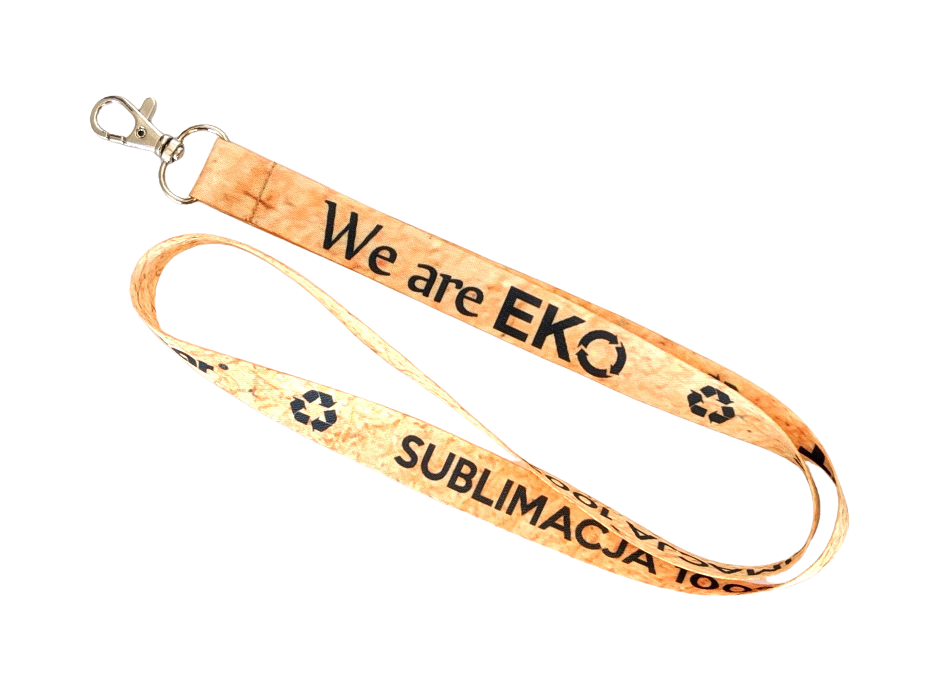
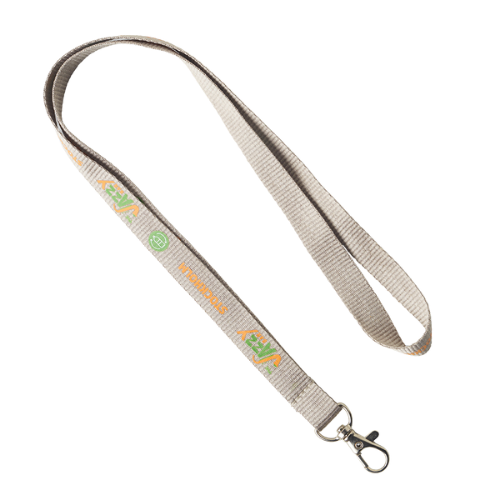
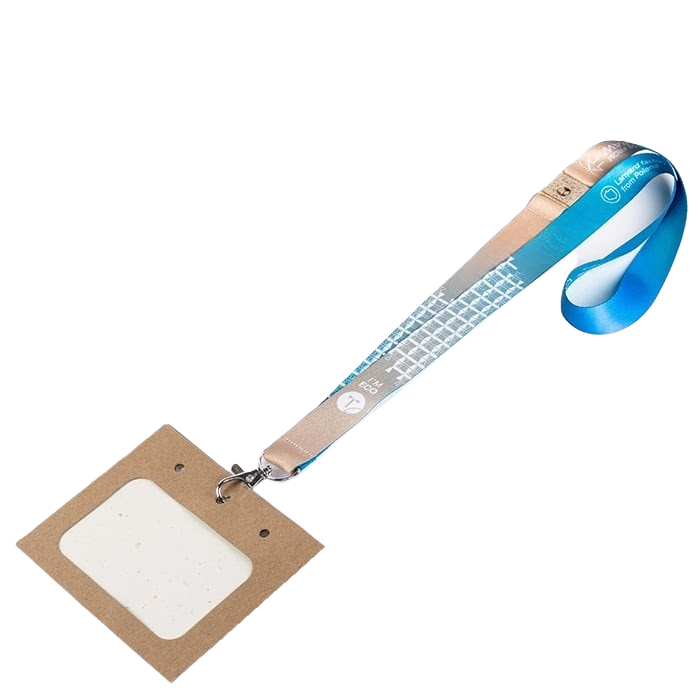
An rPET lanyard is an ordinary polyester lanyard whose fibre came from used bottles instead of from new petrochemicals. That is the entire difference, and it is the reason this is the easiest sustainability decision in the whole catalogue: the material weaves the same, prints the same, wears the same, and costs a few cents more.
Everything below is the same lanyard with different settings — print method, width, and what happens at the safety clip.
| Screen print | Dye sublimation | |
|---|---|---|
| Where the colour sits | Opaque ink on top of the weave | Dyed into the fibre itself |
| Colour accuracy | Pantone matched | Close, but shifts slightly against a chip |
| Artwork | Solid shapes, 1-4 colours | Photographs, gradients, unlimited colours |
| Both sides | Priced per side | Different artwork each side at no extra cost |
| Right for | Corporate ID where brand colours are policed | Festivals, sponsor blocks, event artwork |
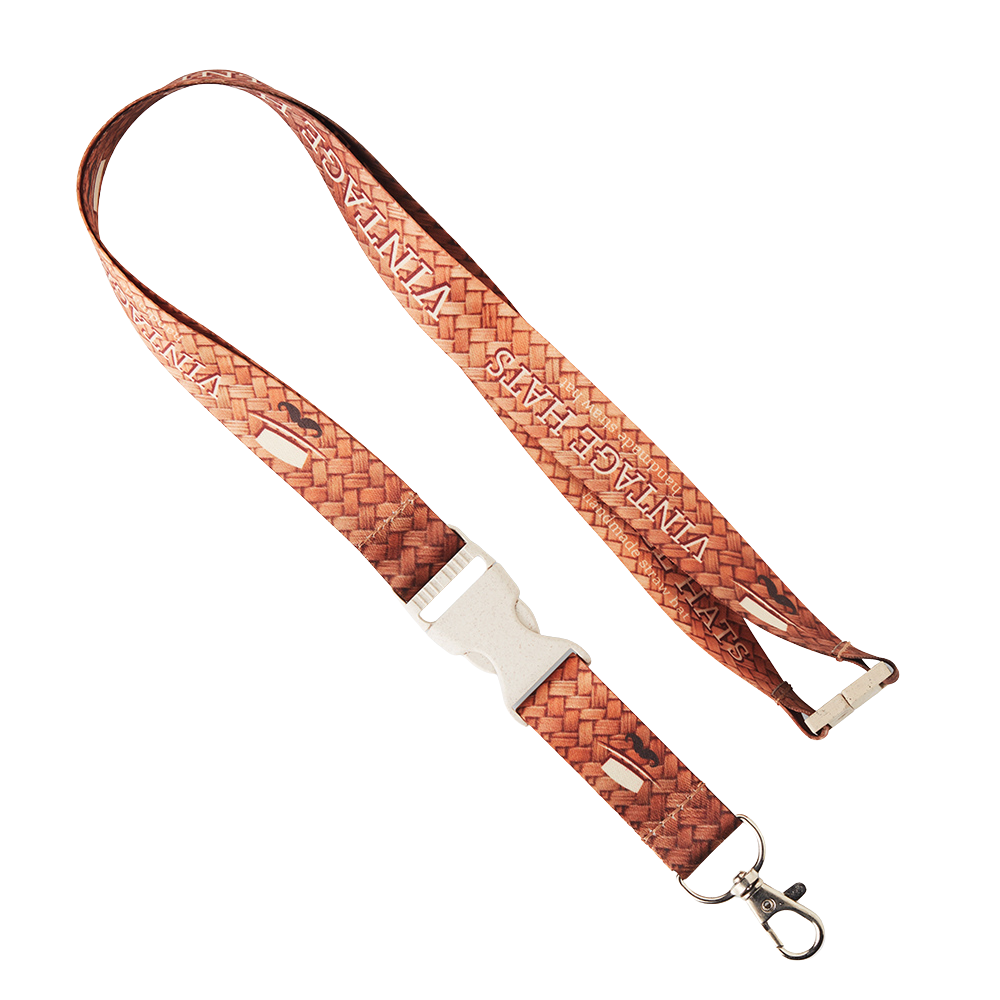
A recycled strap with a standard breakaway clip still contains a small piece of virgin plastic, and it is usually the detail that gets noticed when someone examines the claim. A wheat straw breakaway is moulded from an agricultural byproduct instead: it releases under load exactly as a plastic clip does, and it lets the lanyard be described as a set rather than as a strap with an exception.
If the aim is to remove plastic entirely rather than to recycle it, the natural-material lanyards — cork, cotton, bamboo, washable paper and seed paper — are a different answer to the same question.
| Width | What it suits |
|---|---|
| 10-15 mm | Light and inexpensive. A logo and not much else. |
| 20 mm | The standard. Enough surface for a logo plus an event name, on both sides. |
| 25 mm | Worth the extra when the strap has to carry sponsor logos rather than one brand. |
Chemically it is the same fibre; the difference is where it comes from. rPET is spun from post-consumer PET bottles rather than from new petrochemical feedstock, so the same lanyard is produced without pulling new plastic into the world. It weaves, prints and wears the same, which is why it can replace standard polyester without a specification change.
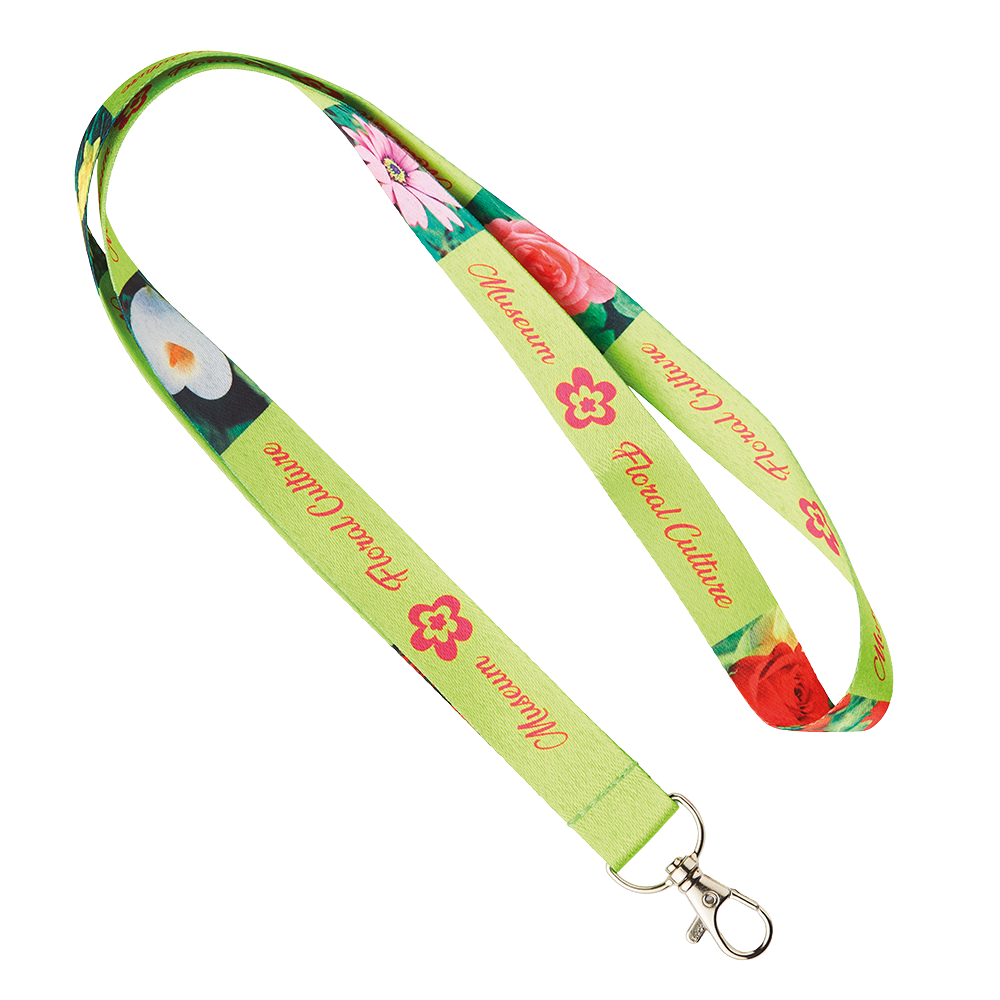
Screen print lays opaque ink on top of the fabric in exact Pantone colours, so it is the choice when brand colours have to be right and the logo is solid shapes. Sublimation dyes the fibre itself, which allows photographs, gradients and different artwork on each side, but colours shift slightly against a Pantone chip. Corporate ID tends to want screen; festivals and sponsor artwork tend to want sublimation.
It solves the hidden-plastic problem. A recycled strap with a standard breakaway clip still puts a new piece of plastic into every lanyard. The wheat straw version is moulded from a plant-based agricultural byproduct, is as strong in use, and lets you say the set contains no virgin plastic without a footnote.
Barely. rPET lanyards start around EUR 0,49 at 100 pieces, which is close enough to virgin polyester that the decision is usually made on the message rather than the invoice. The wheat straw breakaway adds a little more than a standard clip.
Ask for it at quotation stage and we will confirm what documentation the specific mill provides for your run. Do not put a percentage claim on printed material before that is confirmed — claims about recycled content are exactly the kind that get challenged.
10, 15, 20 and 25 mm. 20 mm is the standard for conferences and gives a usable print area on both sides; 15 mm is lighter and cheaper; 25 mm is worth it when the artwork carries sponsors rather than a single logo.
By construction: printed polyester and nylon, round cord, jacquard woven, tubular, satin, neoprene, silicone and PVC. By material story: natural materials, plastic-free and plantable, recycled rPET. By what it carries: badge reels and fittings, bottle straps, phone straps, charging cables, bottle openers. By finish: special effect, reflective and high-visibility. The full range: Lanyards.

Our EU-based production means we meet even the tightest event deadlines.

Each product is created specifically to meet your unique event needs and brand guidelines.

Sustainable materials are available, incl. recycled and biodegradable wristbands.








Our projects