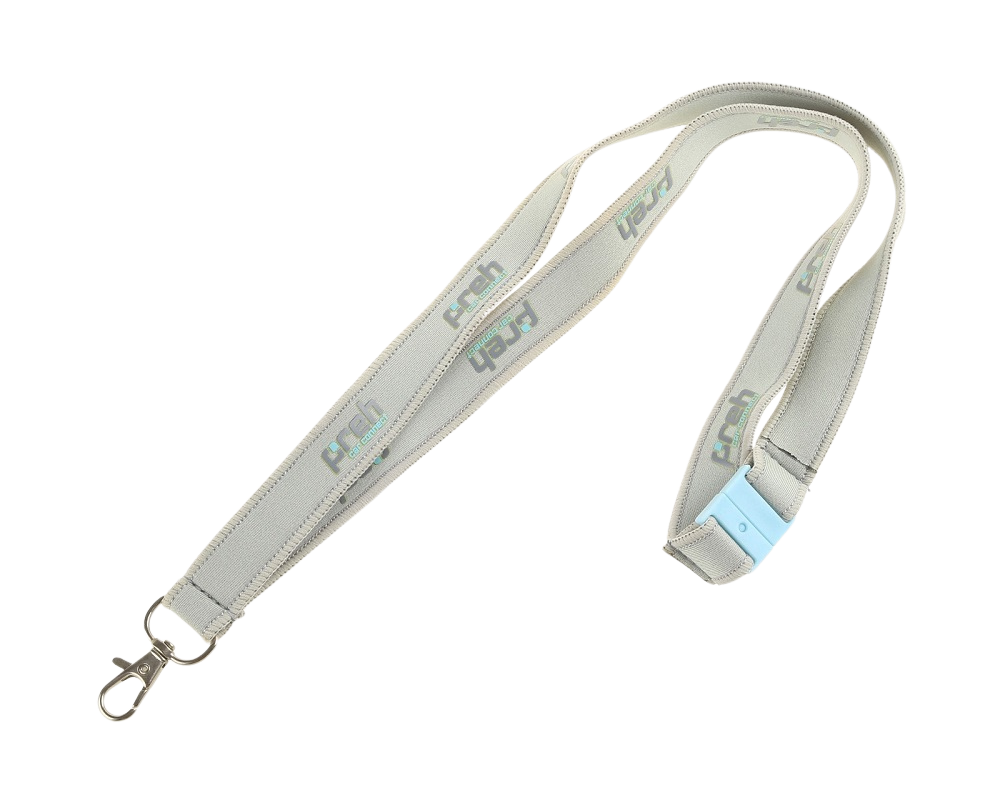
Nobody specifies a lanyard until somebody complains about one. The complaint is almost always the same: a thin strap carrying a heavy key set cuts a line into the back of the neck by the afternoon. Neoprene is the answer to that specific complaint.
Wetsuit material, and it behaves like it
Neoprene is a closed-cell foam. It is thick, soft and slightly springy, so the weight of whatever hangs from it is spread across a wide, cushioned surface instead of concentrated on a narrow edge. Because the cushioning is the material rather than a pad stitched on top, there is nothing to come apart, slide out of place or wear through.
It also does not absorb sweat, which matters in a gym, a warm warehouse or an outdoor summer job.
Construction
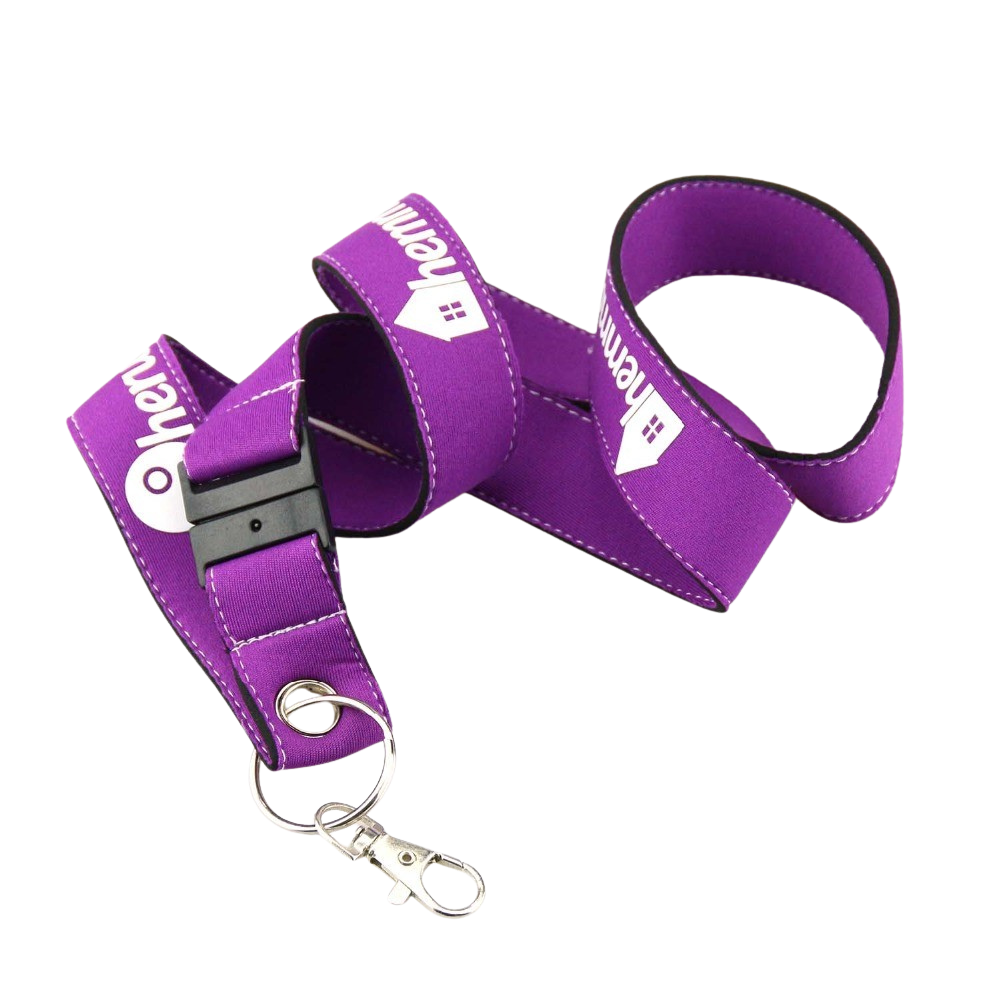
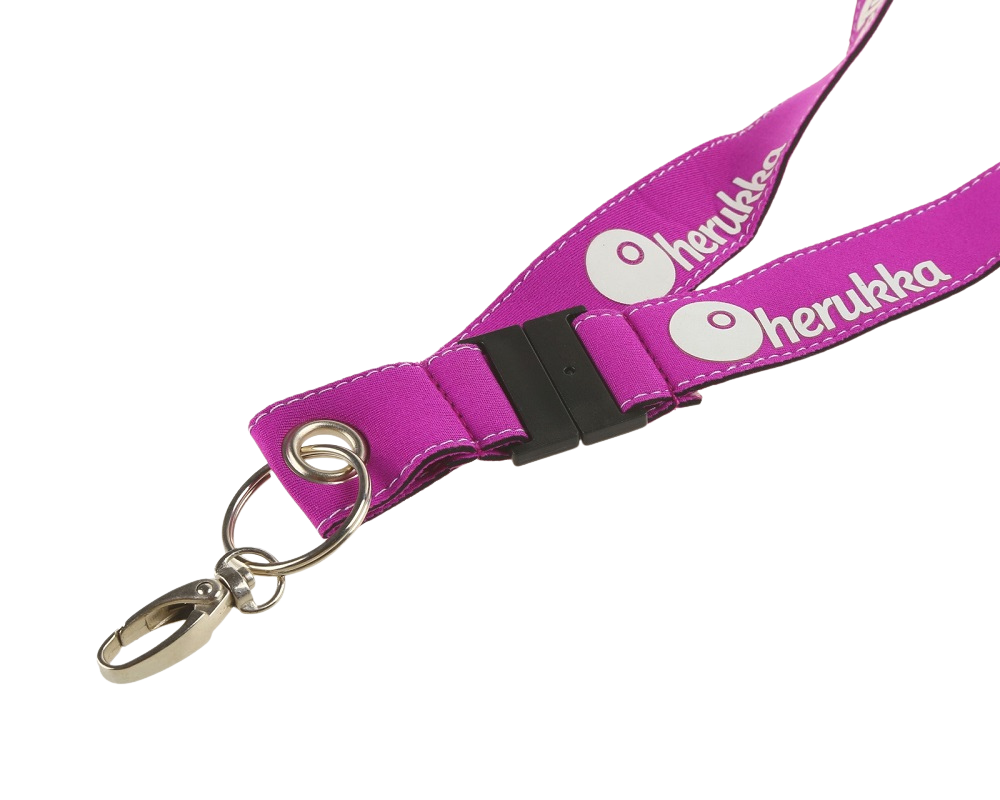
The edges are overlocked — stitched around the raw edge — so the foam does not crumble or fray where the strap folds. This is the difference between a neoprene lanyard that survives a season and one that starts shedding after a month.
Print
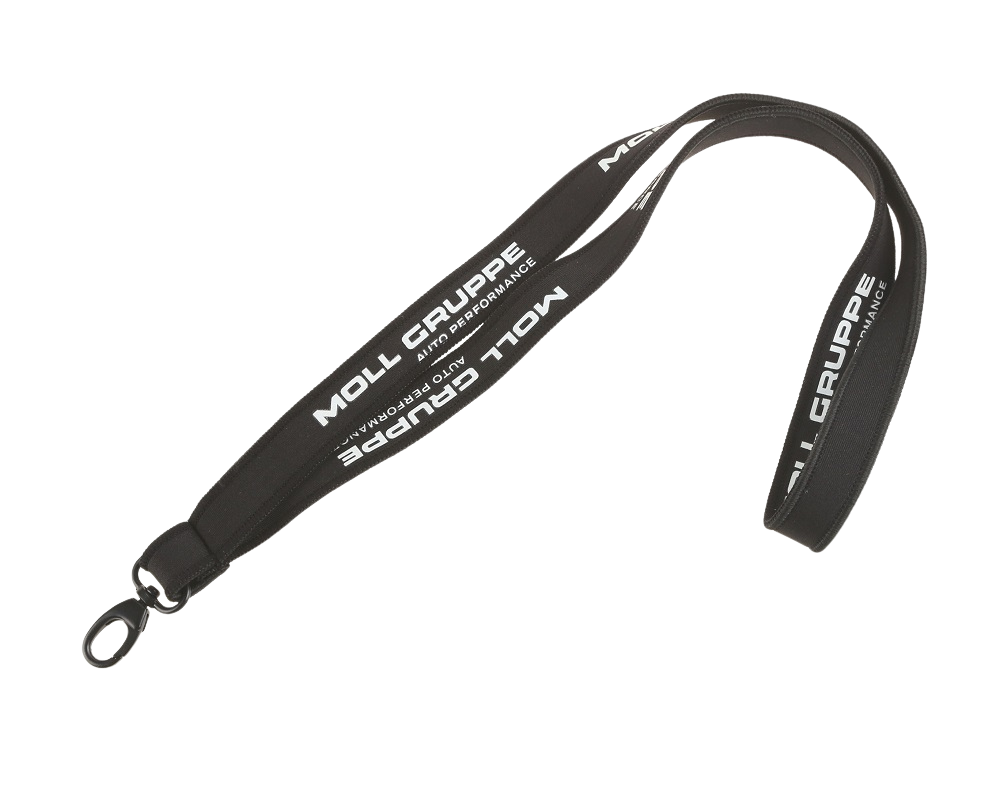
Screen print — one or two colours, crisp, and the cheaper route for a plain logo.
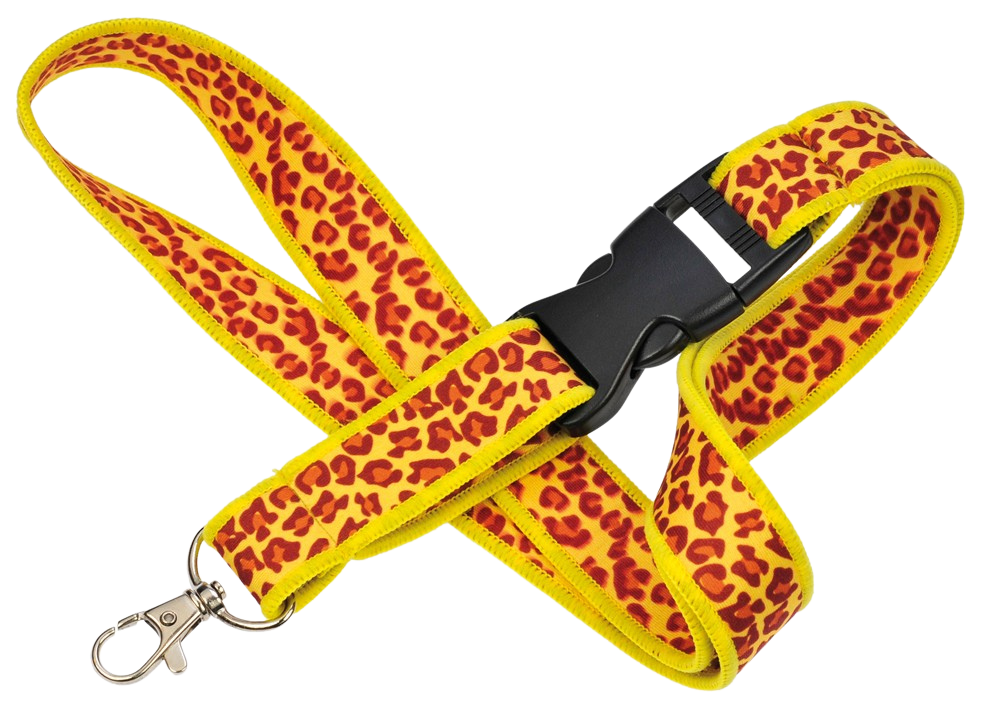
Full-colour sublimation — edge-to-edge patterns: camouflage, leopard, gradients, team colours. Neoprene takes sublimation well because the surface is smooth.
Specifications
Material: neoprene, closed-cell foam
Edges: overlocked stitching
Load: suitable for key sets, radios, scanners and small cameras
Branding: screen print or full-colour sublimation
Minimum order: 100 pieces
Common questions
What makes neoprene different from a padded polyester lanyard?
Neoprene is the same closed-cell foam used in wetsuits. The cushioning is the material itself, not a pad sewn on top, so it cannot separate, bunch up or wear through in one spot. It also does not soak up sweat the way a fabric pad does.
How much weight can it carry?
It is specified for the loads that break thin straps: a full key set, a hand radio, a barcode scanner, a small camera. The point is not tensile strength — most lanyards will hold the weight — it is that the wide, soft strap spreads that weight so the wearer does not feel a line across the neck by mid-afternoon.
Can it be printed in full colour?
Yes. Sublimation prints edge to edge across the whole strap, which is how the leopard-print, camouflage and gradient versions are produced. Screen printing is the option for one or two solid colours and works out cheaper on plain logos.
Who normally orders these?
Gyms and sports clubs, outdoor and adventure operators, maintenance and facilities teams, dive schools, and any employer whose staff have complained about their existing lanyards. It is a comfort purchase, and it is usually a repeat one.