
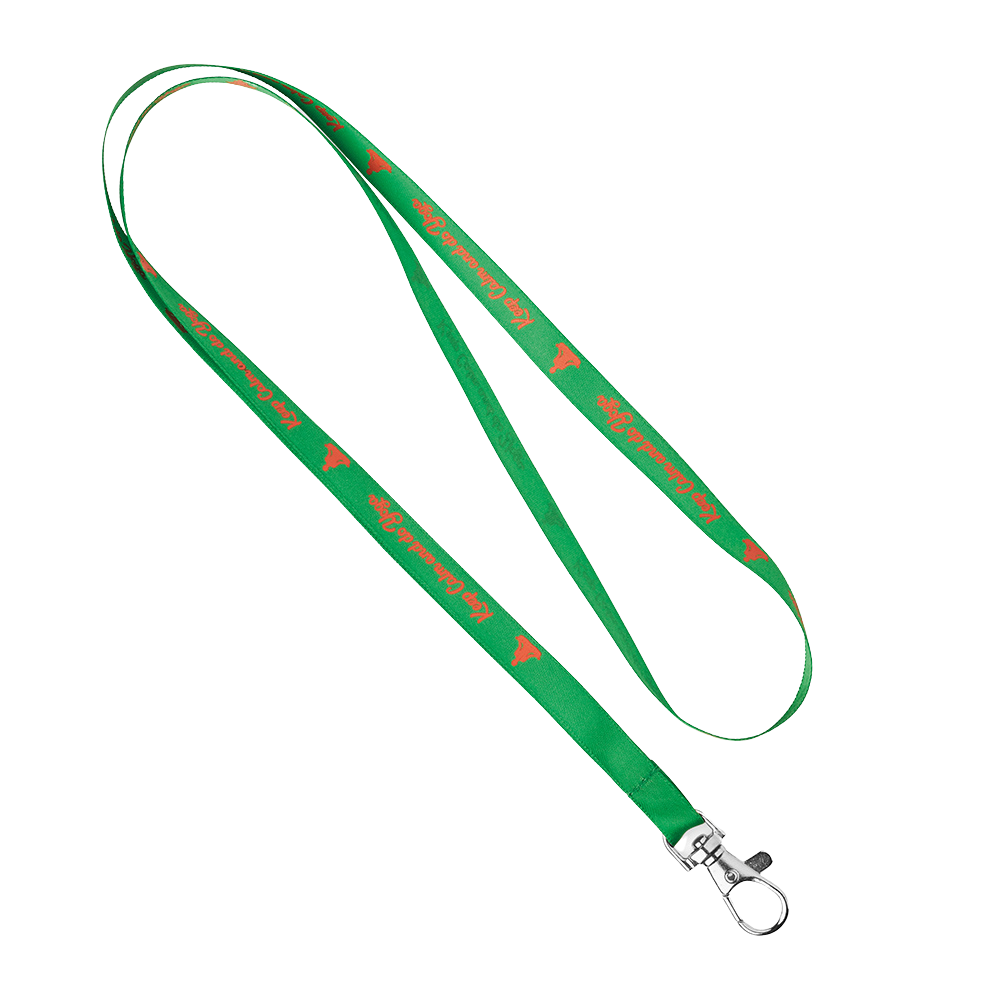
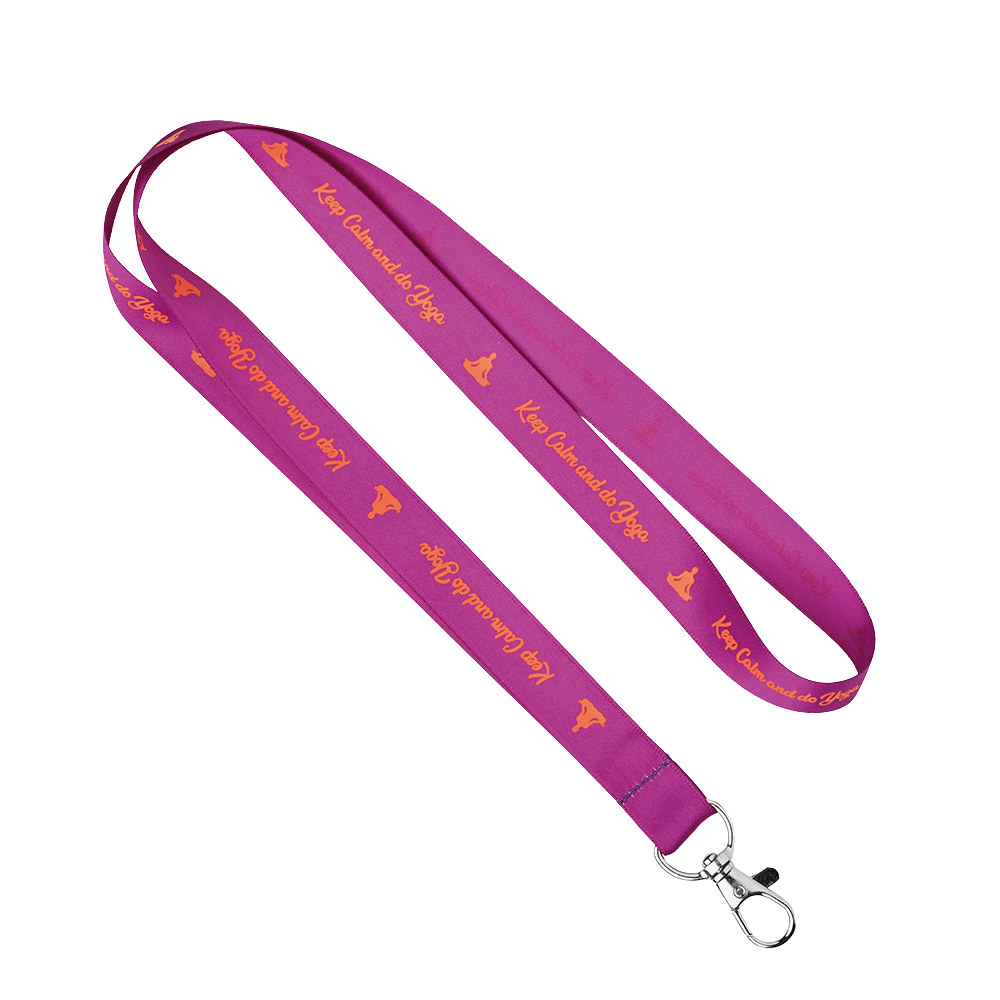
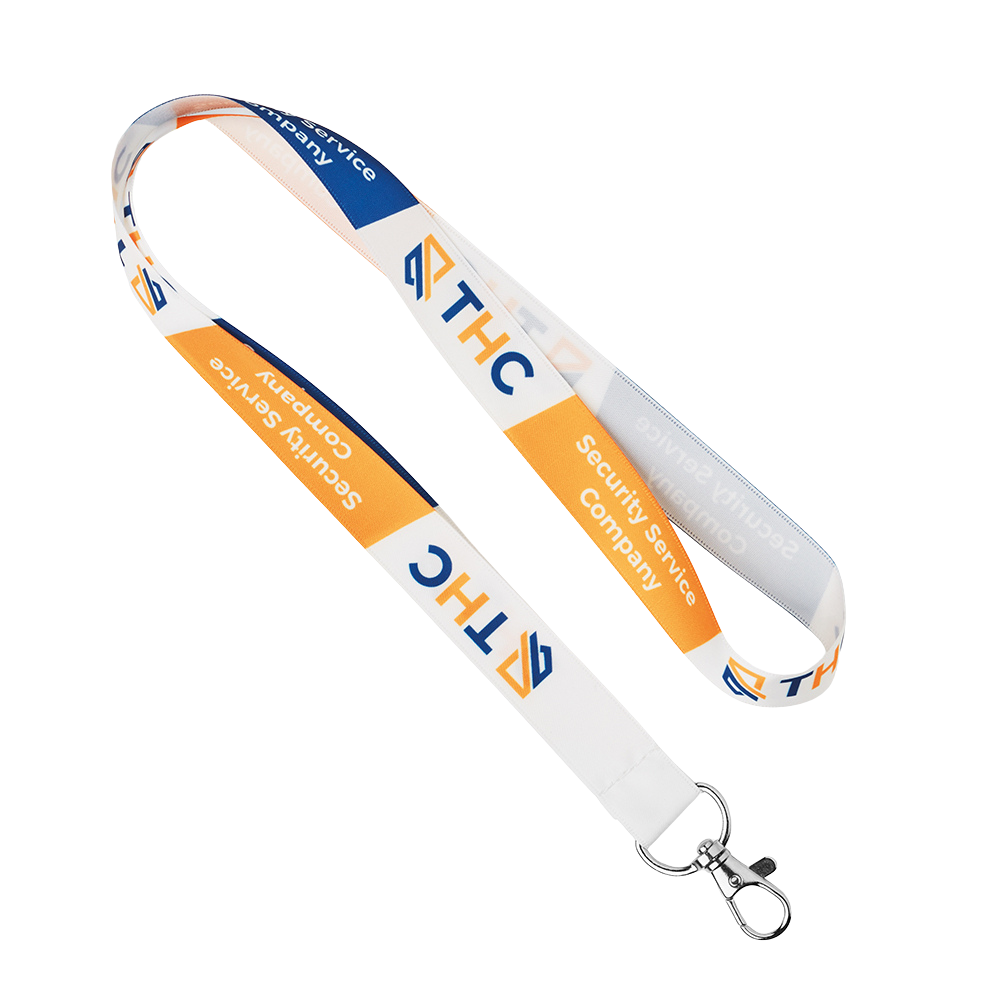
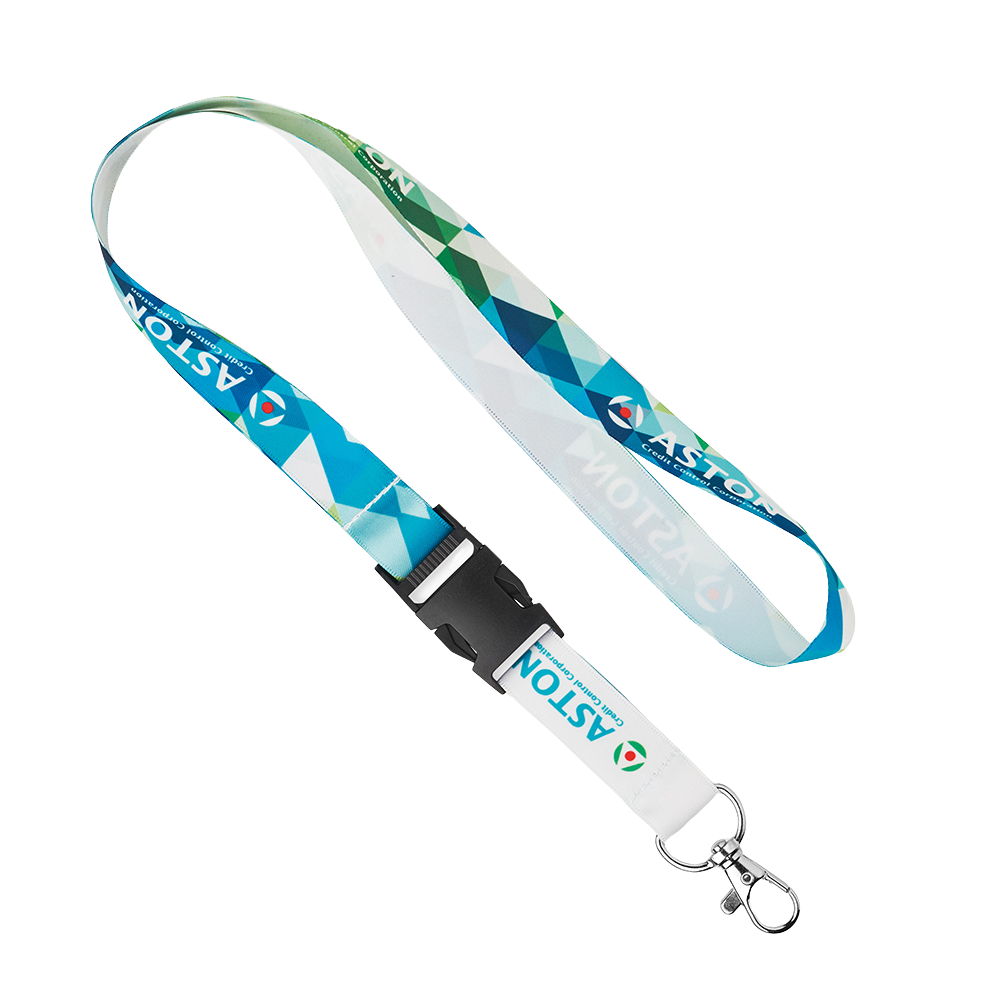
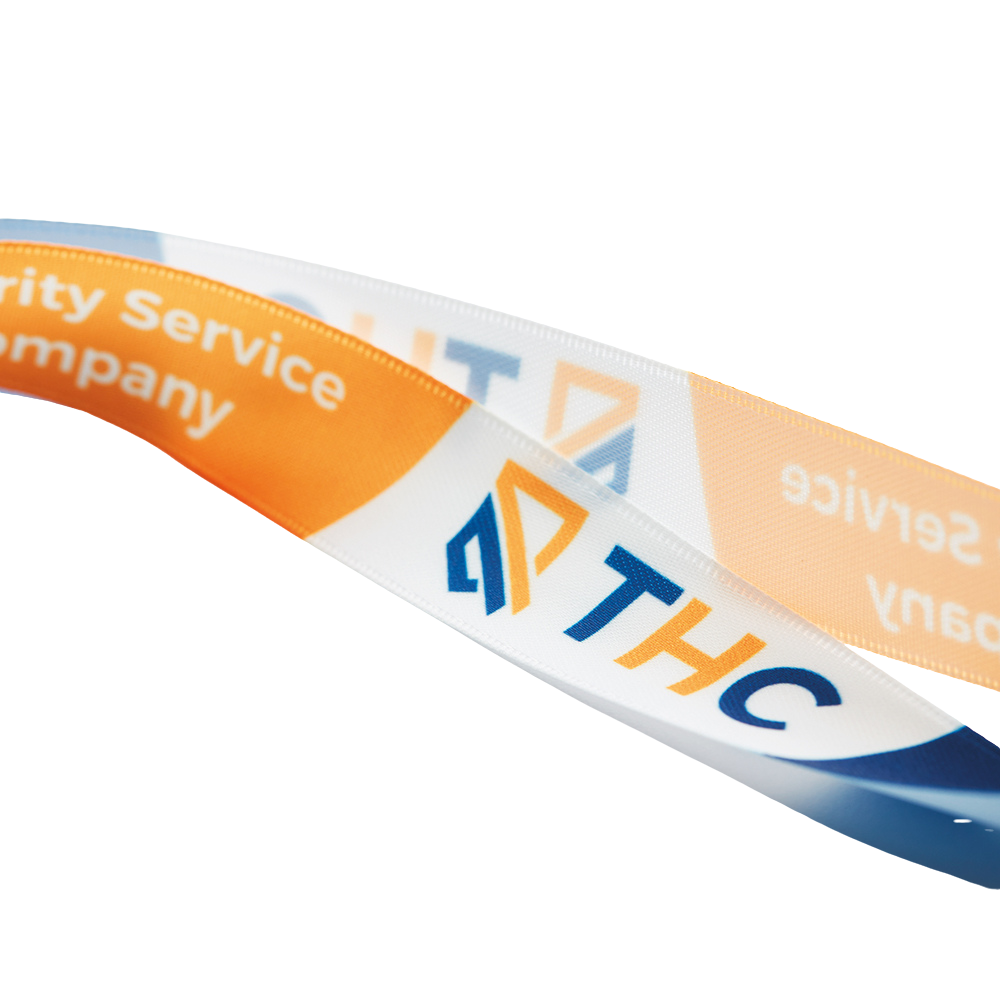
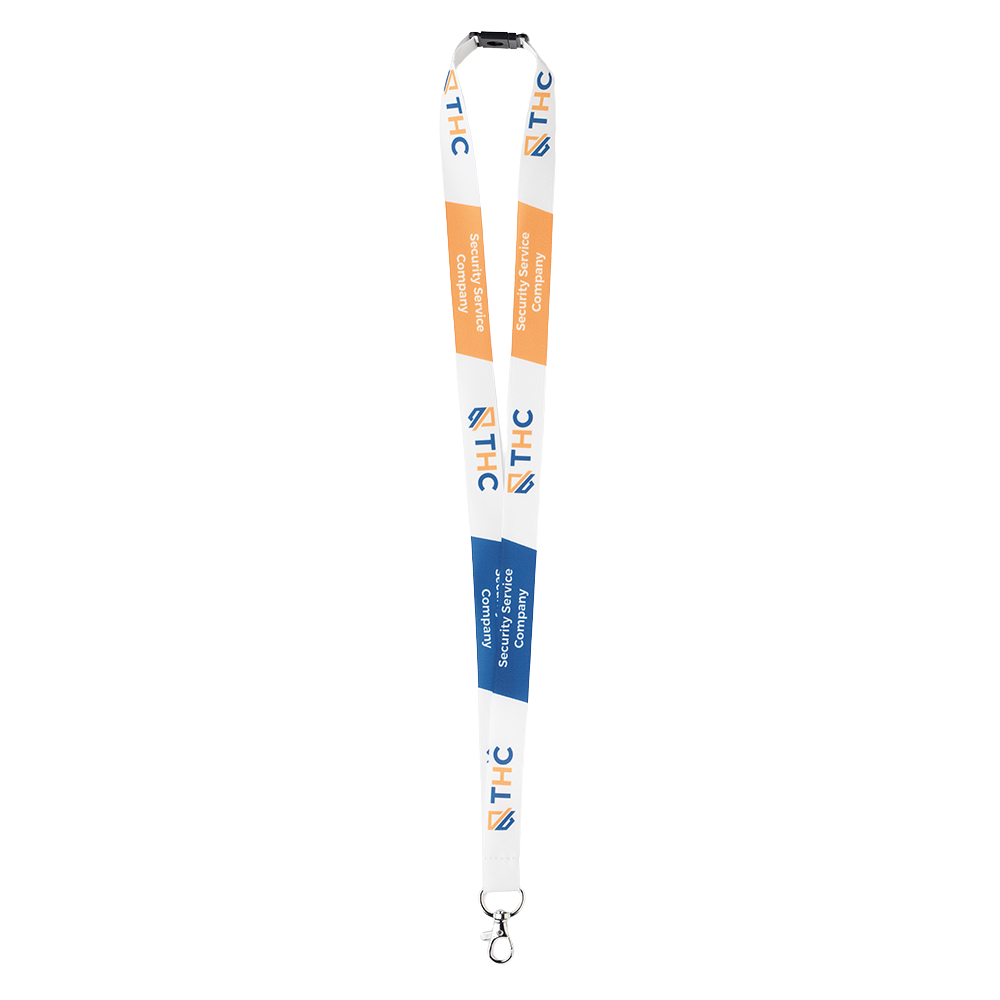
El satén es el único material para cordones que se elige exclusivamente por su aspecto. Una cinta estándar para cordones es acanalada y mate; el satén es liso y refleja la luz, por lo que se utiliza en pases VIP, ceremonias de entrega de premios y actividades corporativas, en lugar de en el material habitual para eventos.
El material presenta una limitación que condiciona todo lo demás: el satén es fino y ligeramente translúcido, por lo que solo se imprime por una cara. La diferencia entre las dos versiones que se muestran a continuación radica en cómo se imprime esa única cara.
| Serigrafía | Sublimación de tinta | |
|---|---|---|
| Dónde se sitúa el color | Tinta sobre el satén | Tinte incorporado a la fibra |
| Precisión del color | A juego con Pantone | A todo color, fotográfica, detallada pero no con la precisión de un chip |
| Ilustración | Logotipos de texto, de uno a tres colores lisos | Degradados, imágenes, colores ilimitados |
| Cinta base | Satén de colores | Satén blanco |
| Durabilidad | Bien; una capa superficial que, con el tiempo, presenta signos de desgaste | No se agrieta, no se descascarilla ni se decolora |
| Adecuado para | Un logotipo limpio en el que se respetan los colores de la marca | Material gráfico para eventos, patrocinadores, diseños fotográficos |
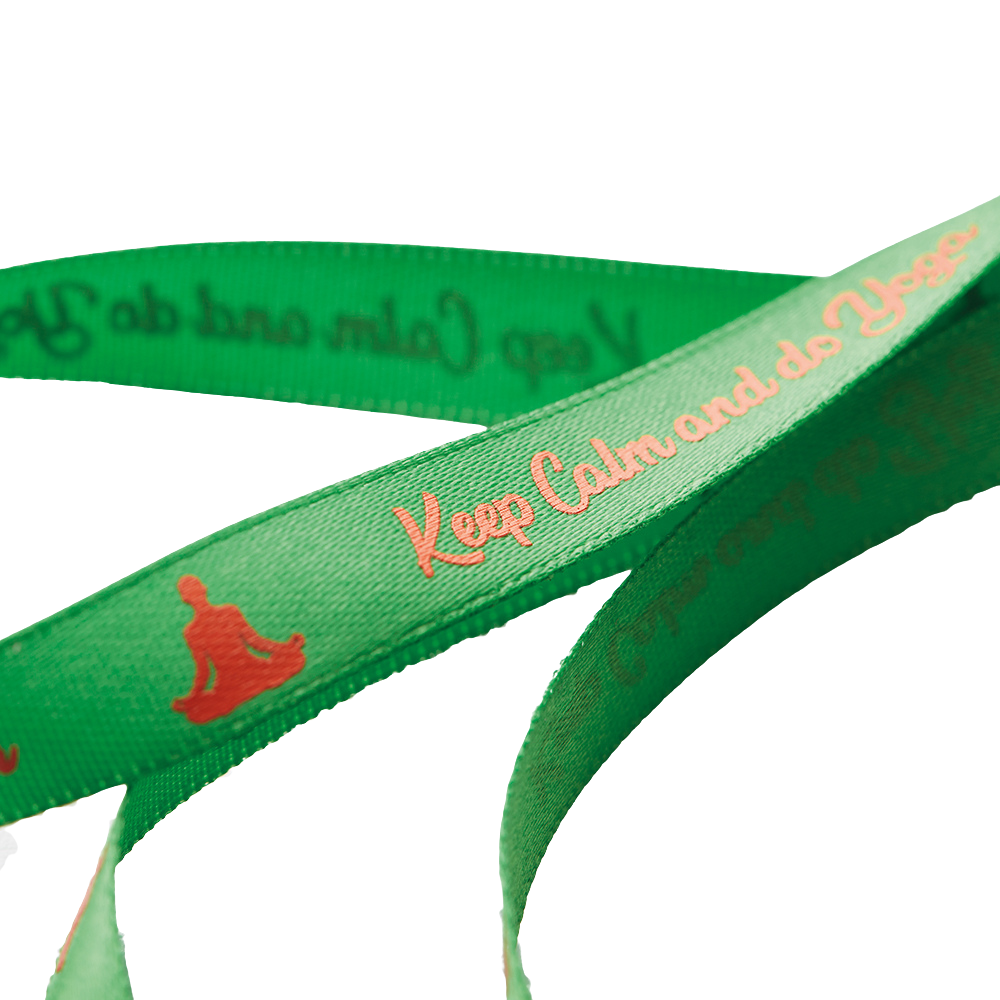
Ambos métodos imprimen por una sola cara. La cinta es tan fina que, si se imprimieran ambas caras, la imagen de una se vería a través de la otra; además, en el satén serigrafiado, el diseño suele ser ligeramente visible en el reverso, lo cual es normal en este material y no constituye un defecto. Si el encargo requiere realmente un diseño diferente en el anverso y el reverso, utiliza un tejido o, en su lugar, un cordón estándar de poliéster.
La serigrafía aplica tinta con relación Pantone sobre el satén, por lo que los colores de la marca son exactos y el contraste con el brillo es nítido: la opción ideal para un logotipo tipográfico o un logotipo de dos colores. La sublimación tiñe el diseño directamente en la fibra, lo que permite reproducir fotografías, degradados y una gama ilimitada de colores, y el resultado no se agrieta ni se despega. El satén es fino y ligeramente translúcido, por lo que ambos métodos se aplican solo por una cara.
Esto se debe a que la cinta es tan fina que la tinta o el tinte aplicados en ambas caras se verían a través y se mezclarían entre sí. En el satén serigrafiado, el diseño suele ser ligeramente visible en el reverso, lo cual es normal en este material y no constituye un defecto. Si necesitas un diseño realmente diferente en cada cara, lo más adecuado es optar por un cordón tejido o de poliéster estándar.
Tejido y acabado. Una cinta estándar para cordones es acanalada y mate; la de satén es lisa y refleja la luz, lo que le da ese aspecto de alta gama. Además, se nota la diferencia al llevarla alrededor del cuello. La contrapartida es que la de satén es más delicada y la impresión queda diferente, por lo que es más adecuada para uso VIP y corporativo que para un campo de festival embarrado.
Cualquiera de las dos opciones es válida, y la decisión depende del diseño gráfico. Si el nivel VIP se identifica con un logotipo sencillo en los colores de la marca, la serigrafía sobre satén de color da una impresión de mayor calidad. Si el pase incluye el diseño gráfico del evento, los patrocinadores o un diseño fotográfico, la sublimación sobre satén blanco es la única técnica que permitirá reproducirlo fielmente.
La sublimación ofrece unos resultados especialmente buenos, ya que el color se encuentra en el interior de la fibra y no se agrieta, no se descascarilla ni se va con los lavados. La serigrafía sobre satén es resistente al uso normal, pero, al tratarse de una capa superficial, mostrará signos de desgaste antes en las zonas donde el cordón roza con el cuello de la chaqueta.
A partir de 100 unidades, unas dos o tres semanas desde la aprobación del diseño. Ambos métodos de impresión tienen el mismo precio de salida, por lo que la elección depende realmente del diseño y no del presupuesto.
Por definición: poliéster y nailon estampados, cordón redondo, tejido jacquard, tubular, satén, neopreno, silicona y PVC. Según el artículo de «Material Story»: materiales naturales, sin plástico y plantable, rPET reciclado. Por lo que transporta: carretes para tarjetas de identificación y accesorios, cintas para botellas, correas para el móvil, cables de carga, abridores de botellas. Por acabado: efecto especial, reflectante y de alta visibilidad. La gama completa: Cintas de cuello.

Nuestras producciones con sede en la UE significan que cumplimos incluso con los plazos de entrega de eventos más ajustados.

Cada producto se crea específicamente para satisfacer las necesidades únicas de su evento y las directrices de su marca.

Disponemos de materiales sostenibles, incluyendo pulseras recicladas y biodegradables.








Nuestros proyectos