
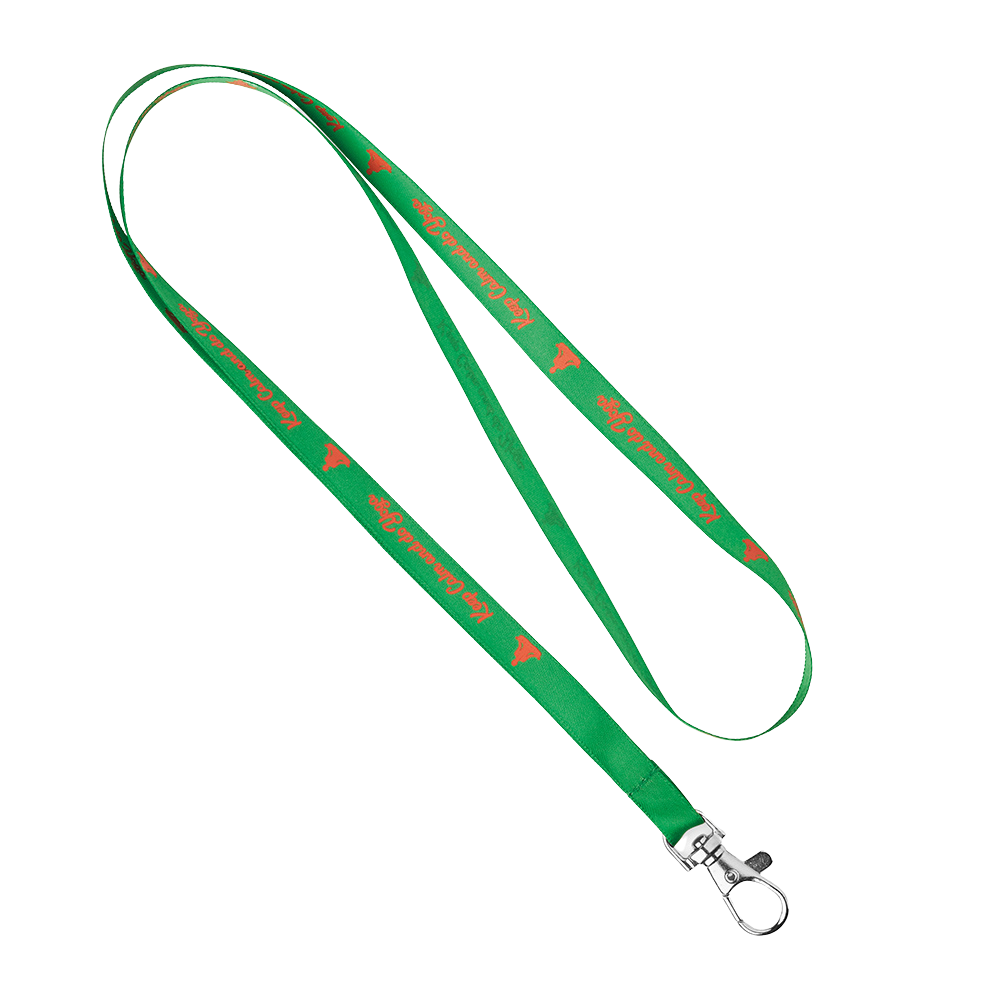
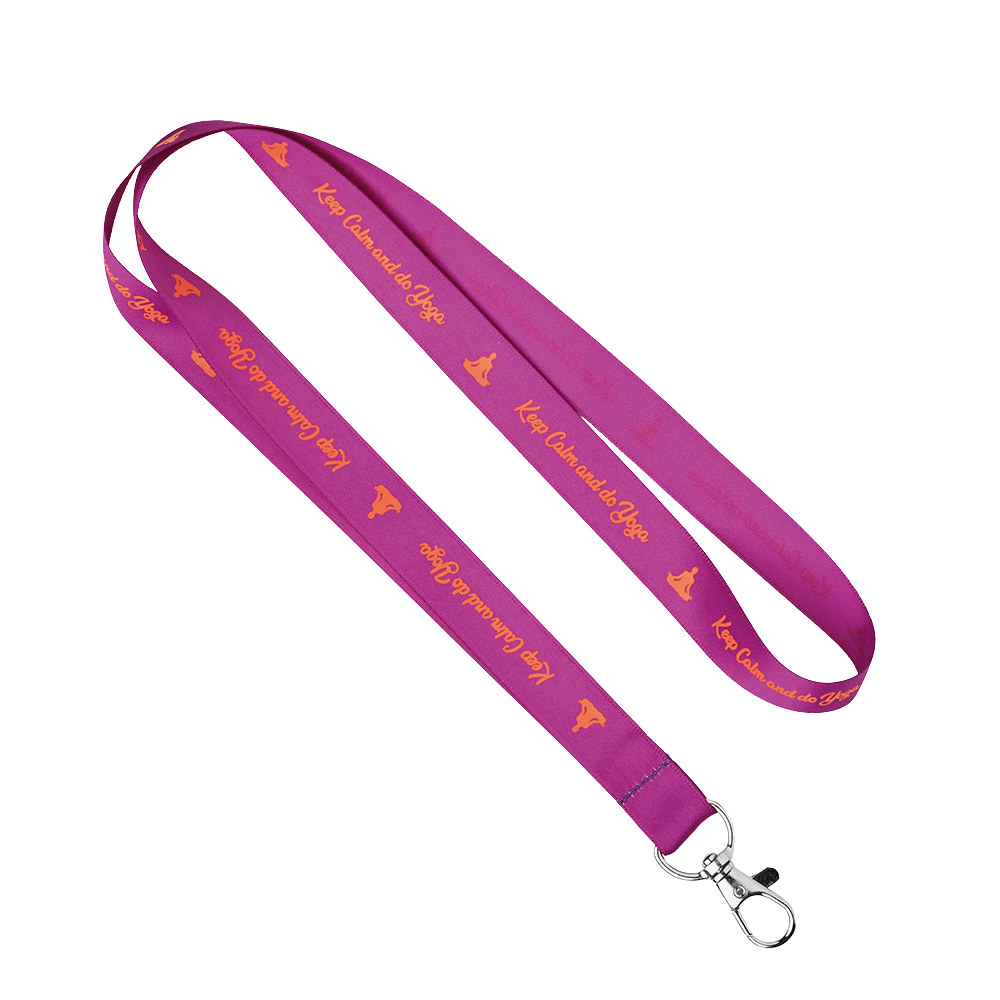
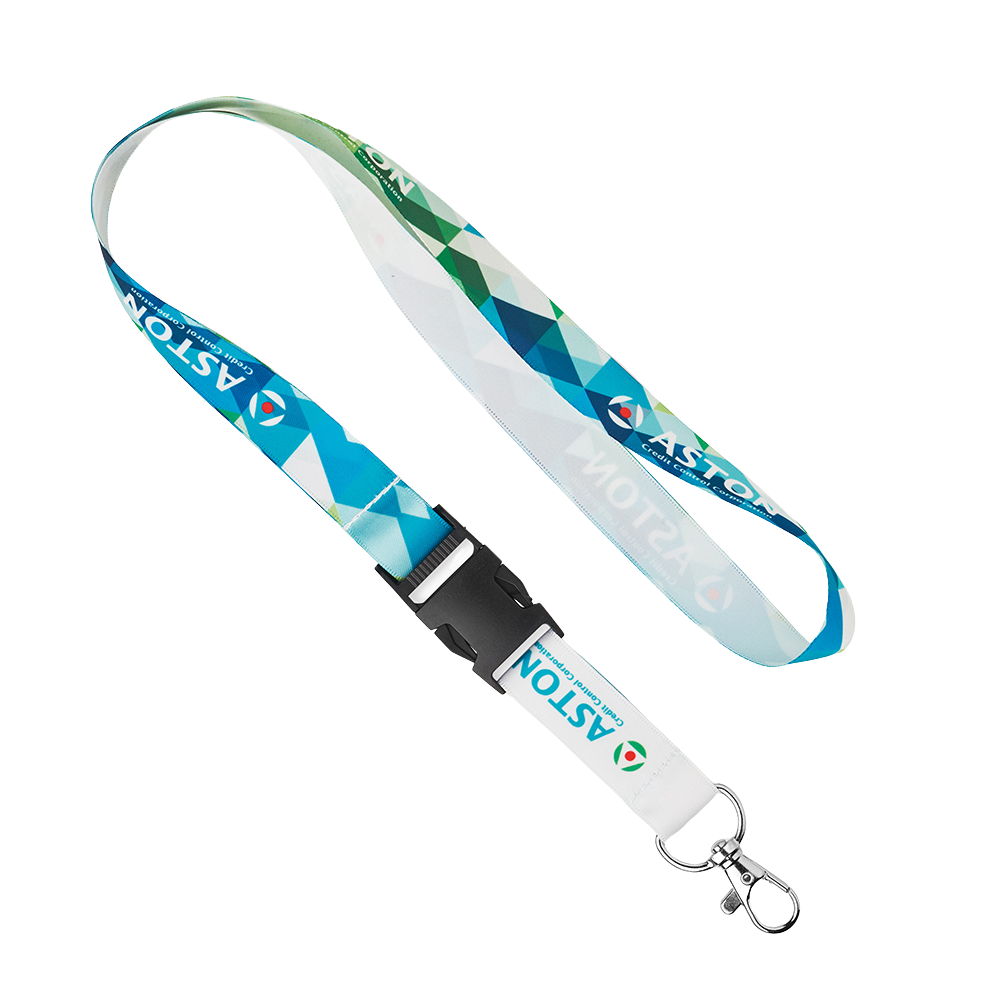
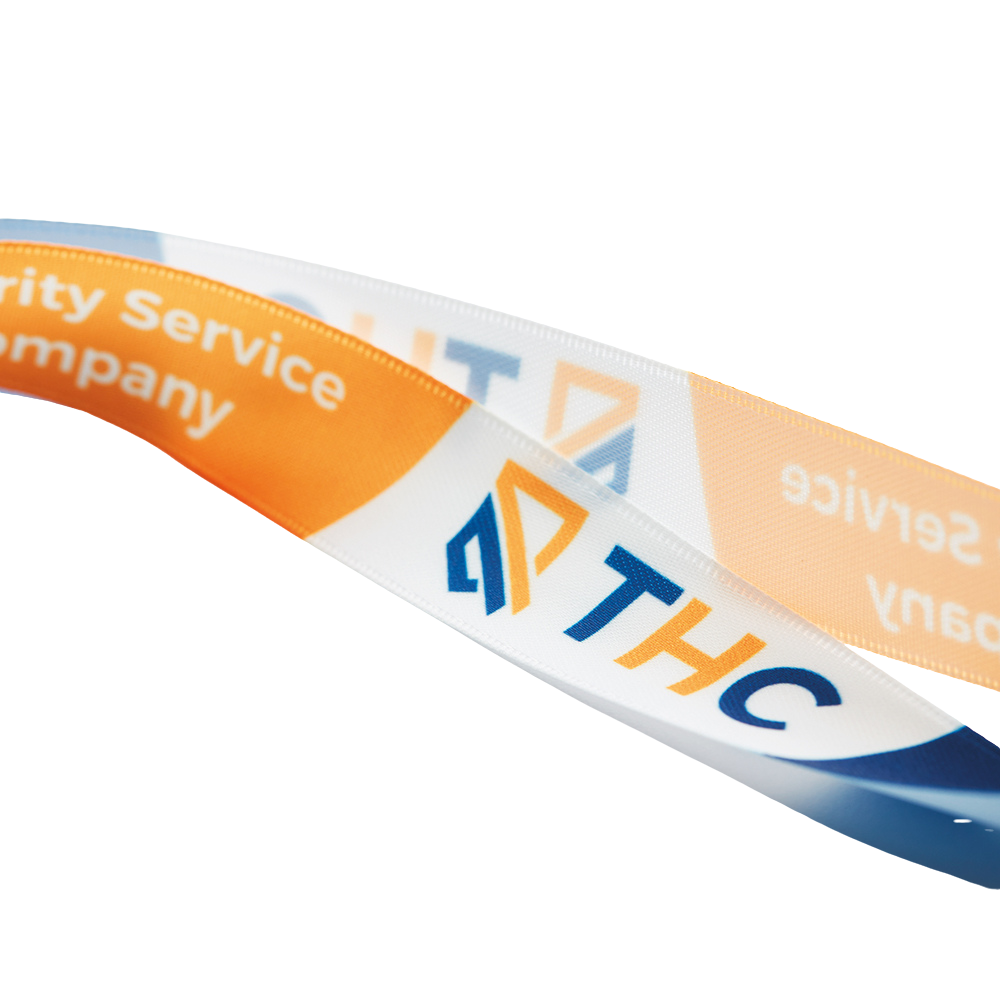
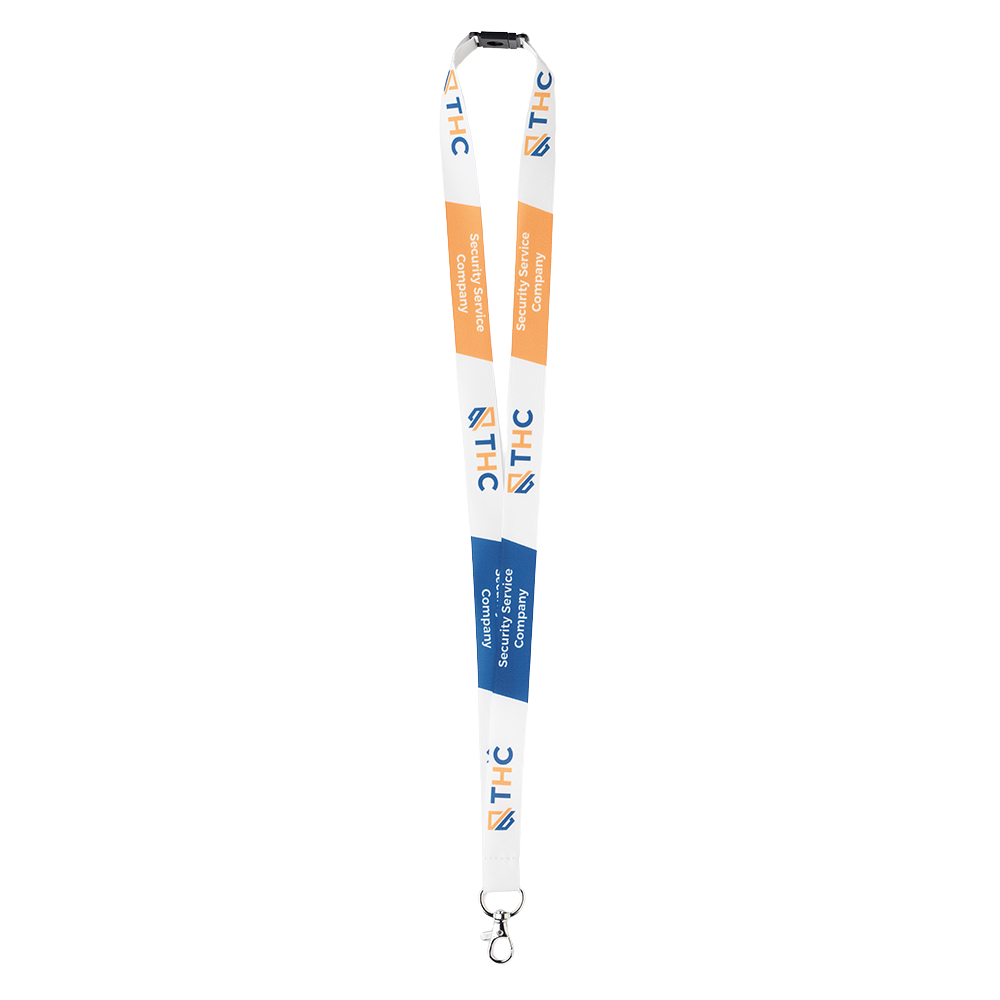
Satiini on ainoa kaulanauhan materiaali, joka valitaan puhtaasti ulkonäön perusteella. Tavallinen kaulanauhan nauha on uurrettu ja mattapintainen; satiini on sileä ja heijastaa valoa, minkä vuoksi sitä käytetään VIP-kulkuluvissa, palkintojenjakotilaisuuksissa ja yritystapahtumissa pikemminkin kuin yleisissä tapahtumissa.
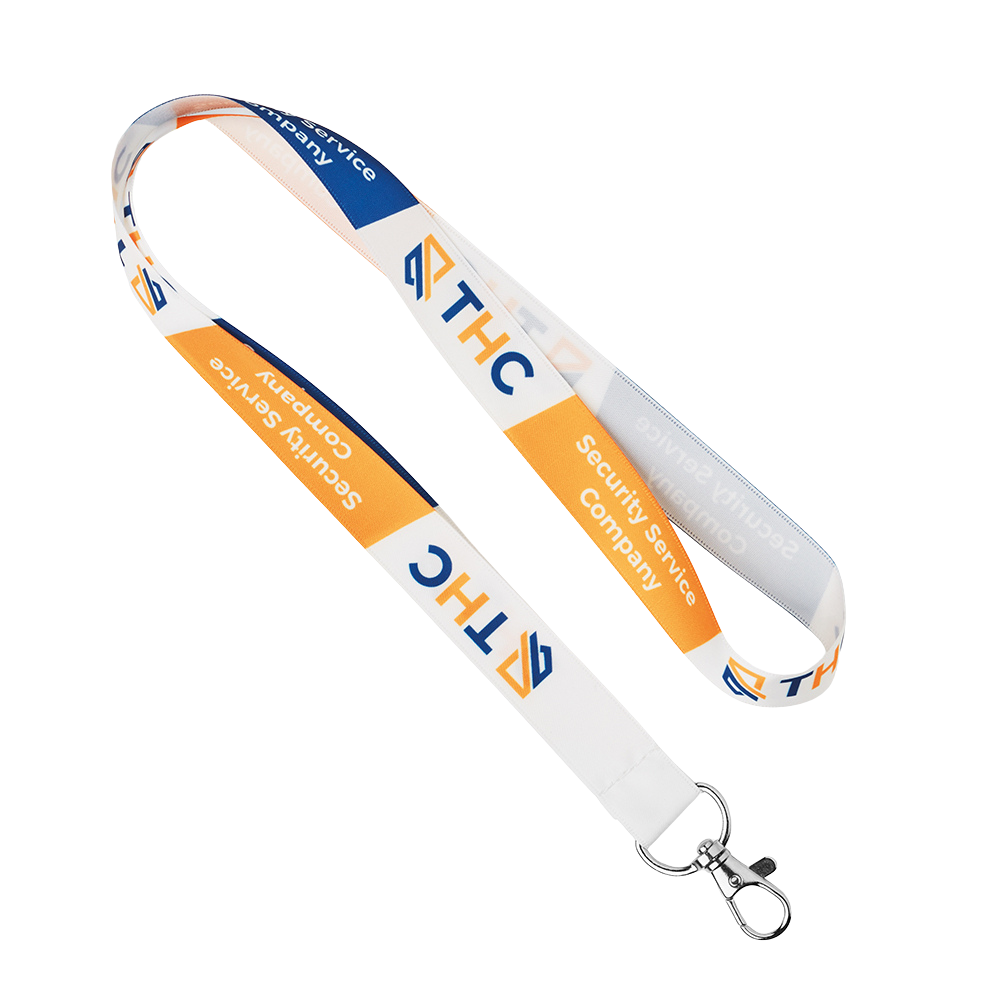
Materiaalissa on yksi rajoitus, joka vaikuttaa kaikkeen muuhun: satiini on ohutta ja hieman läpikuultavaa, joten se painetaan vain toiselle puolelle. Alla olevien kahden version ero on siinä, miten tuo yksi puoli on painettu.
| Silkkipaino | Värisublimaatio | |
|---|---|---|
| Missä väri sijaitsee | Mustea satiinin päällä | Värjätty kuituun |
| Värien tarkkuus | Pantone -yhteensopiva | Täysvärinen, valokuvamainen, tarkka mutta ei täysin identtinen |
| Taideteos | Tekstimerkit, yksi–kolme yksiväristä väriä | Väriliukut, kuvat, rajaton määrä värejä |
| Perusnauha | Värillinen satiini | Valkoinen satiini |
| Kestävyys | Hyvä; pintakerros, jossa näkyy ajan myötä kulumisen merkkejä | Ei halkeile, irtoa eikä haalistu |
| Sopii | Selkeä logo, jossa brändin värejä on käytetty johdonmukaisesti | Tapahtuman grafiikka, sponsorit, valokuvasuunnittelu |
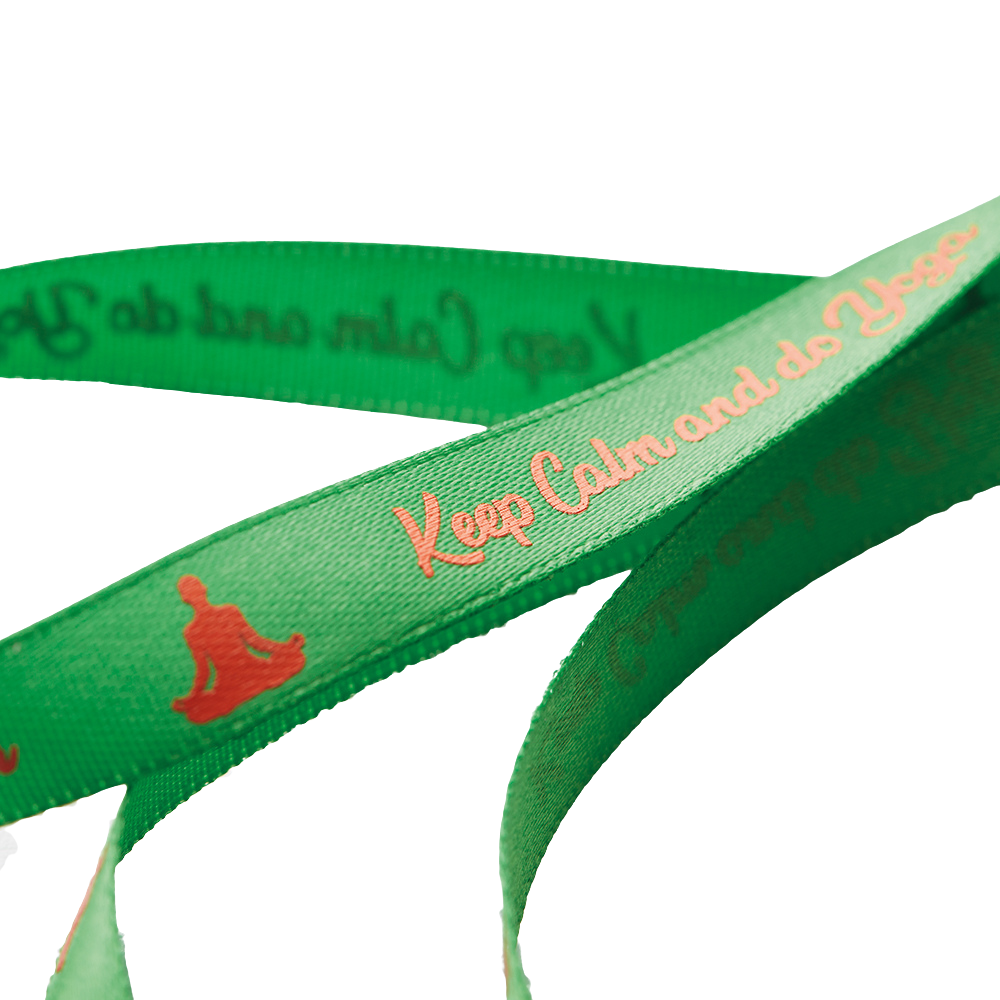
Molemmat menetelmät tulostavat vain toiselle puolelle. Nauha on niin ohut, että molemmille puolille tulostettaessa kuvio näkyisi läpi toiselle puolelle, ja silkkipainetussa satiinissa kuvio näkyy usein heikosti kääntöpuolella — tämä on materiaalin ominaisuus, ei virhe. Jos tilauksessa todella vaaditaan eri kuvioita etu- ja takapuolelle, käytä kudottu tai sen sijaan tavallinen polyesterinen kaulanauha.
Silkkipainossa satin-kankaan päälle levitetään Pantone-yhteensopivaa mustetta, joten brändin värit ovat tarkat ja kontrasti kiiltoa vasten terävä — oikea valinta tekstilogolle tai kaksiväriselle logolle. Sublimaatiopainatuksessa kuvio värjätään suoraan kuituun, mikä mahdollistaa valokuvien, väriliukujen ja rajattoman värivalikoiman käytön, eikä painatus halkeile tai irtoa. Satiini on ohutta ja hieman läpikuultavaa, joten molemmat menetelmät ovat yksipuolisia.
Koska nauha on niin ohut, että molemmille puolille levitetty muste tai väriaine näkyisi läpi ja sekoittuisi keskenään. Silkkipainetussa satiinissa kuvio näkyy usein heikosti kääntöpuolella, mikä on materiaalin luonteenomaista eikä virhe. Jos tarvitset molemmille puolille täysin erilaiset kuvitukset, kudottu tai tavallinen polyesterinen kaulanauha on oikea valinta.
Kudonta ja pinta. Tavallinen kaulanauhan nauha on uurrettu ja mattapintainen; satiini on sileää ja heijastaa valoa, minkä ansiosta se vaikuttaa korkealaatuiselta. Se tuntuu myös erilaiselta kaulalla. Haittapuolena on, että satiini on herkempää ja painatus tarttuu siihen eri tavalla, joten se sopii paremmin VIP- ja yrityskäyttöön kuin mutaiselle festivaalialueelle.
Kumpi tahansa, ja päätös riippuu grafiikasta. Jos VIP-taso ilmaistaan selkeällä logolla brändin väreissä, silkkipainatus värilliselle satiinille näyttää kalliimmalta. Jos kulkuluvassa on tapahtuman grafiikkaa, sponsorien logoja tai valokuvakuvio, sublimaatiopainatus valkoiselle satiinille on ainoa vaihtoehto, jolla se voidaan toistaa.
Sublimaatiopainatus toimii erityisen hyvin, koska väri on kuitujen sisällä eikä se voi halkeilla, irrota tai pestä pois. Silkkipainatus satiinikankaalle kestää normaalia kulutusta, mutta se on pintakerros, joten se kuluu nopeammin kohdissa, joissa kaulanauha hankaa takin kaulusta vasten.
100 kappaleesta alkaen toimitusaika on noin kaksi–kolme viikkoa hyväksytyn kuvamateriaalin jälkeen. Molempien painomenetelmien lähtöhinta on sama, joten valinta riippuu pikemminkin kuvamateriaalista kuin budjetista.
Rakenteellisesti: painettu polyesteri ja nailon, pyöreä johto, jacquard-kudottu, putkimainen, satiini, neopreeni, silikoni ja PVC. Aineiston tarinan mukaan: luonnonmateriaalit, muoviton ja istutettavissa, kierrätetty rPET. Sen sisällön perusteella: merkkinauhakelat ja kiinnikkeet, pullonhihnat, puhelimen kiinnityshihnat, latauskaapelit, pullonavaajat. Viimeistelyn mukaan: erikoistehoste, heijastava ja hyvin näkyvä. Koko valikoima: Kaulanauhat.

EU-pohjainen tuotantomme varmistaa, että vastaamme tiukimpiinkin tapahtuma-aikatauluihin.

Jokainen tuote luodaan erityisesti vastaamaan ainutlaatuisia tapahtumatarpeitasi ja brändiohjeita.

Saatavilla on kestäviä materiaaleja, kuten kierrätettyjä ja biohajoavia rannekkeita.





Hankkeemme