
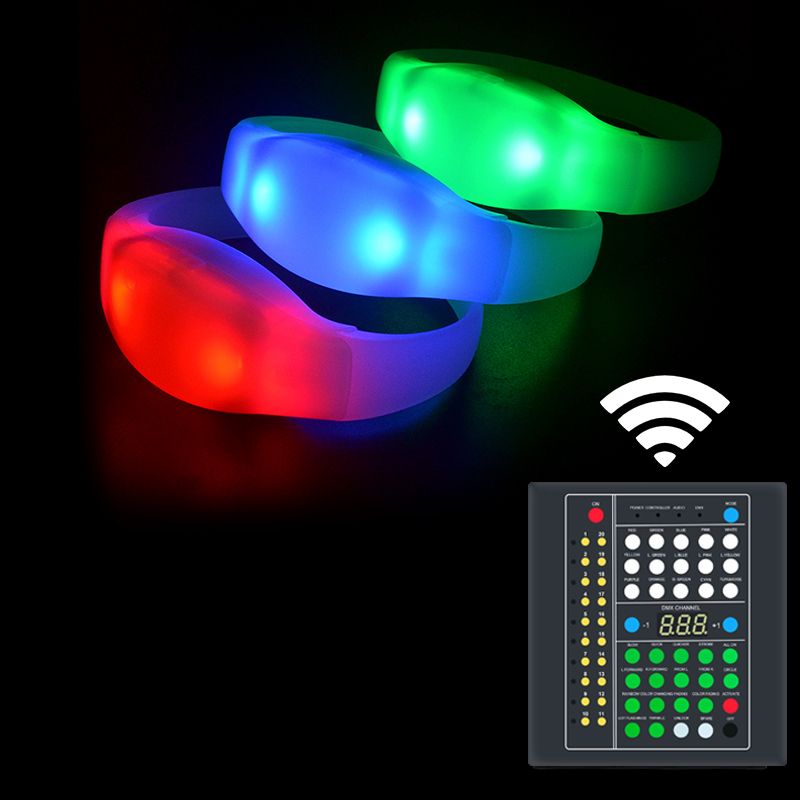
A remote controlled LED wristband turns an audience into a lighting fixture. One operator, one controller, and every band in the venue changes colour on the same beat. That is why they appear at stadium concerts, arena tours and corporate galas where the crowd itself is part of the production.
All the models below sit on the same control platform. What differs is the band: how heavy it is, how bright it is, how it fastens and how much logo it carries.
| Style | What it is | Choose it when |
|---|---|---|
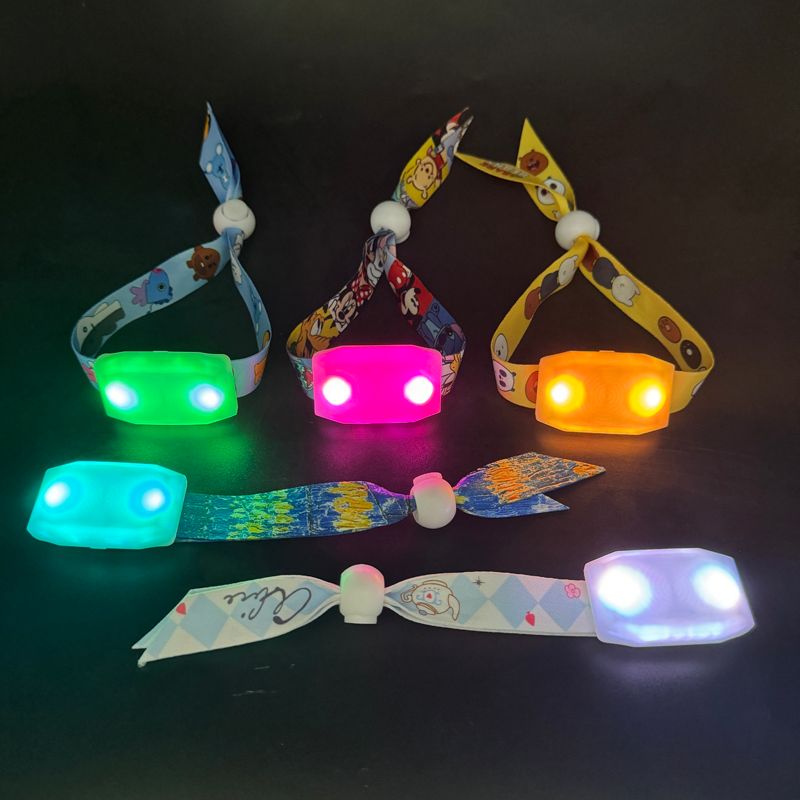
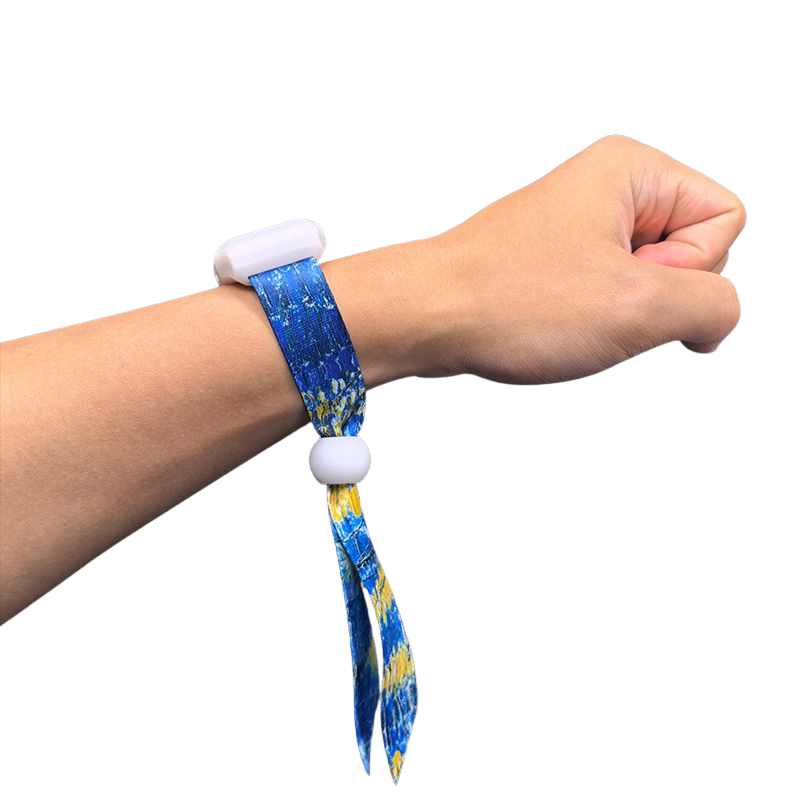
| Fabric | Woven textile strap with the LED module built in | The band should feel premium and be kept afterwards. Corporate and high-end events. |
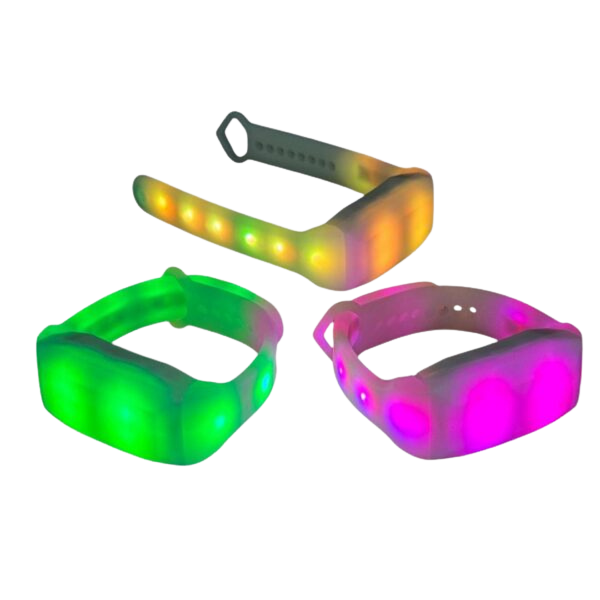
| Silicone | The standard. Soft, durable, cheapest of the range | General festival and concert use at volume. |
| Nylon cord | Adjustable cord fastening, casual festival look | Outdoor festivals and night runs, where a light band beats a moulded one. |
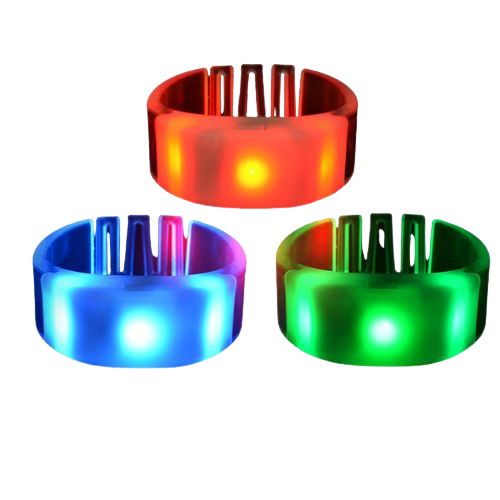
| Rigid translucent PVC | Curved shell with an interlocking closure; light diffuses through the whole band | Corporate VIP areas and product launches. The best-looking model when lit. |
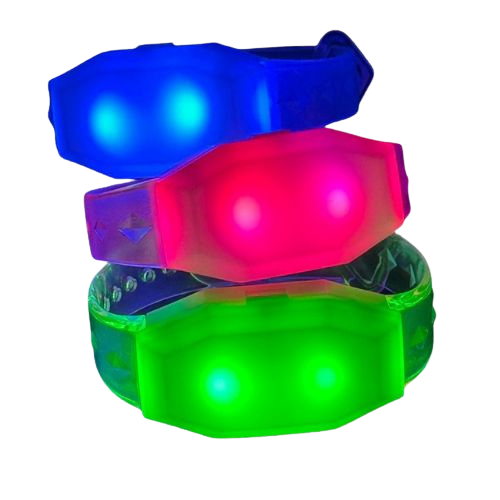
| Stadium, 11 LEDs | Eleven-LED array on an AAA cell | Arenas and stadiums. Ordinary button-cell bands are not bright enough for the upper tiers. |
| Lightweight | Slim ABS housing on a thin silicone strap | Multi-day festivals. Weight is what makes people take a band off. |
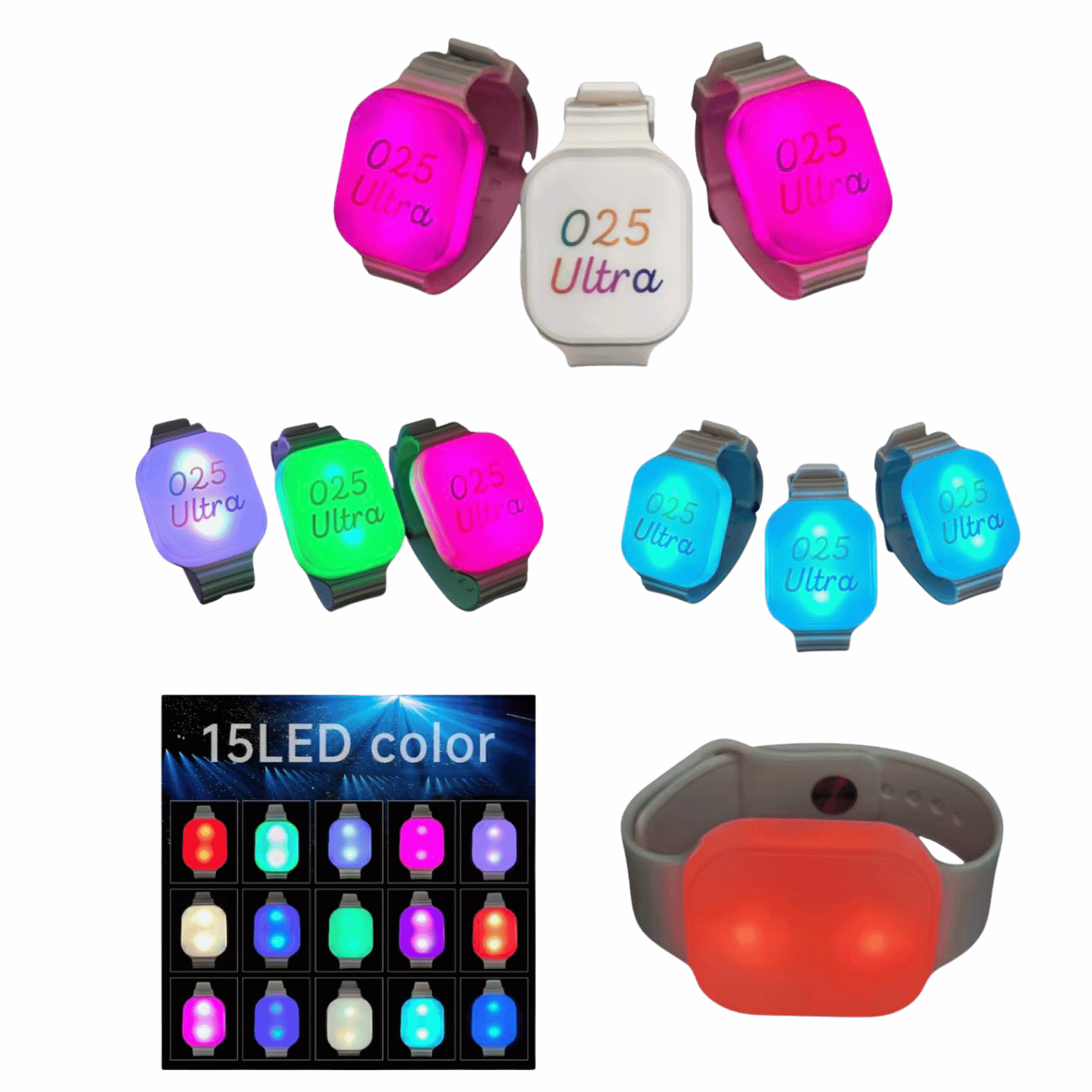
| Watch-style | Oversized flat housing, 30 g, ABS and medical-grade silicone | When the logo matters most: by far the largest flat print surface here. |
RF is the simpler path: a handheld or desk controller triggers colours and patterns directly, with no lighting desk involved. DMX512 makes the crowd another fixture in your existing show file, cued alongside the rig. Corporate events and mid-size festivals almost always use RF; touring productions use DMX because the crowd has to be on the timeline with everything else.
Either way, the controller is a separate item and you need one. It is reusable across events, so it is a one-off cost rather than a per-band one. In a large venue the position of the transmitter decides the coverage. It is the thing that most often goes wrong on a first order, so we plan it with you at quotation stage.
Every model switches between 15 dynamic colour modes live. In practice a show uses three or four: a house colour, a chorus colour, a strobe and a blackout. Programming more than that tends to look busy from the floor rather than impressive.
On the standard models two coin cells give about 6 hours of steady light and up to 12 hours in flash and effect modes, which covers an event evening. The stadium model uses AAA because eleven LEDs need the extra capacity. For anything multi-day or touring, rechargeable LED wristbands are the correct product. Changing batteries across five thousand bands is a job nobody does twice.
If there is no operator and no lighting desk, sound activated bands do a similar job autonomously by reacting to the music.
Yes. The wristbands have no way to synchronise on their own. The controller is what turns a thousand separate bands into one show. It is a separate purchase and it is reusable across events, so it is a one-off cost rather than a per-band one. Without it, order sound-activated or flashing bands instead, which need no operator at all.
RF is the simpler route: a handheld or desk controller triggers colours and patterns directly, with no lighting desk involved. DMX512 integrates the wristbands into an existing lighting rig so the crowd is another fixture in the show file, cued alongside the lights. Corporate events and mid-size festivals use RF; touring productions use DMX.
Start from the venue. A stadium needs the 11-LED model, because ordinary button-cell bands are not bright enough to read from the upper tiers. A multi-day festival needs the lightweight one, because weight is what makes people take a band off. A corporate VIP area suits the rigid translucent PVC, which diffuses light through the whole band. If the logo matters more than anything, the watch-style housing has by far the largest flat print surface.
With the standard controller the signal reaches up to about 800 m with clear line of sight with the battery wristbands, and about 400 m with the rechargeable model. One controller runs any number of bands. Place the transmitter high and in view of the audience, not inside a flight case. For arenas and stadiums we plan the transmitter position with you at quotation stage and recommend a test on site, since it is the single thing that most often goes wrong on a first order.
One controller has 10 zones that you control independently, and a 20-zone version is available. With zone-changeable bands you reassign the groups on site with the controller, between events or between rounds, with no limit on how many bands go into one zone. Single bands cannot be addressed one by one.
It keeps its last colour and follows the controller again automatically when it comes back into range. For your order we can have the sleep mode removed in production, so the bands keep their colour even after a long pause in the signal.
The controller can lock the button on the band, so guests cannot change their colour during the show.
Yes, in normal rain. Our standard and rechargeable bands are rated IP65, which means protection against splashing water. Full performance in continuous heavy rain cannot be guaranteed, and the bands should not be submerged.
On the standard models two coin cells give about 6 hours of steady light and up to 12 hours in flash and effect modes, enough for a full event evening; the AAA stadium model runs longer because it has more capacity to spend on more LEDs. For multi-day events or anything touring, rechargeable LED wristbands are the correct product. Replacing batteries across five thousand bands is not a job anyone wants twice.
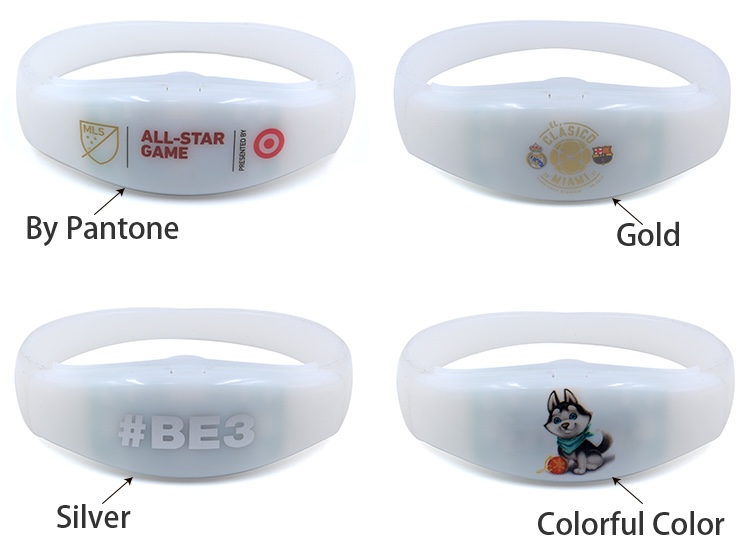
Yes, on every style. The watch-style module has the largest flat area and reproduces detailed logos best; on fabric and nylon cord bands the strap itself carries the print. Bear in mind that the band is seen lit and in the dark, so a high-contrast logo works far better than a subtle one.
From 100 pieces, about three to four weeks from approved artwork. The controller has no minimum and is usually ordered one or two per venue.
Remote controlled LED wristbands for a synchronised show, rechargeable LED wristbands for multi-day and touring use, sound activated and flashing bands when there is no operator, and the RF and DMX controllers that drive them. Also: LED lanyards, remote controlled LED necklaces, light sticks, LED cups and everything else that lights up.

Production details, prices and delivery dates are confirmed for your order.

Each product is created specifically to meet your unique event needs and brand guidelines.

Sustainable materials are available, incl. recycled and biodegradable wristbands.








Our projects