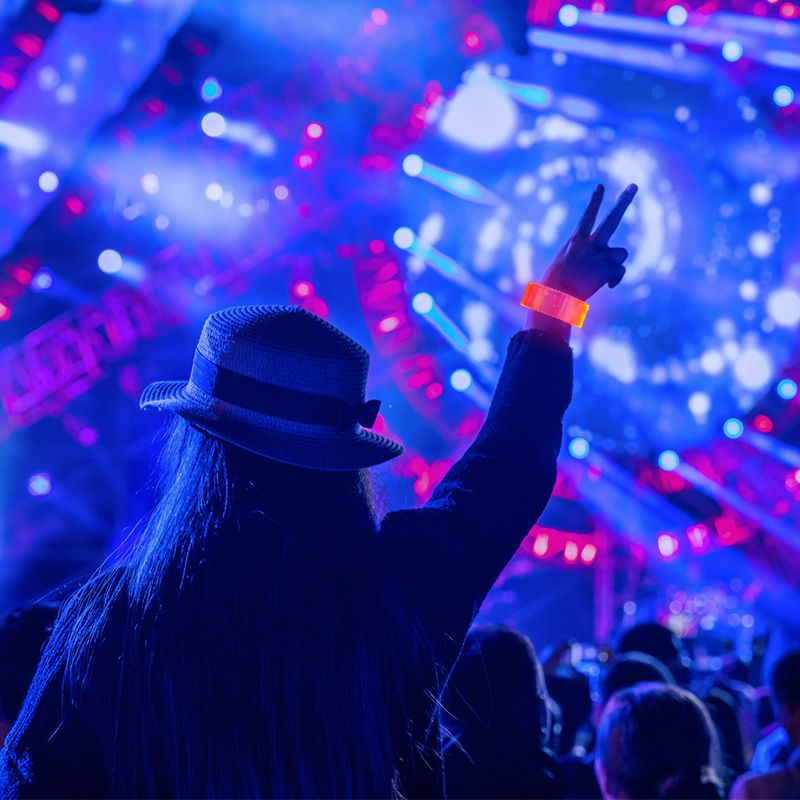
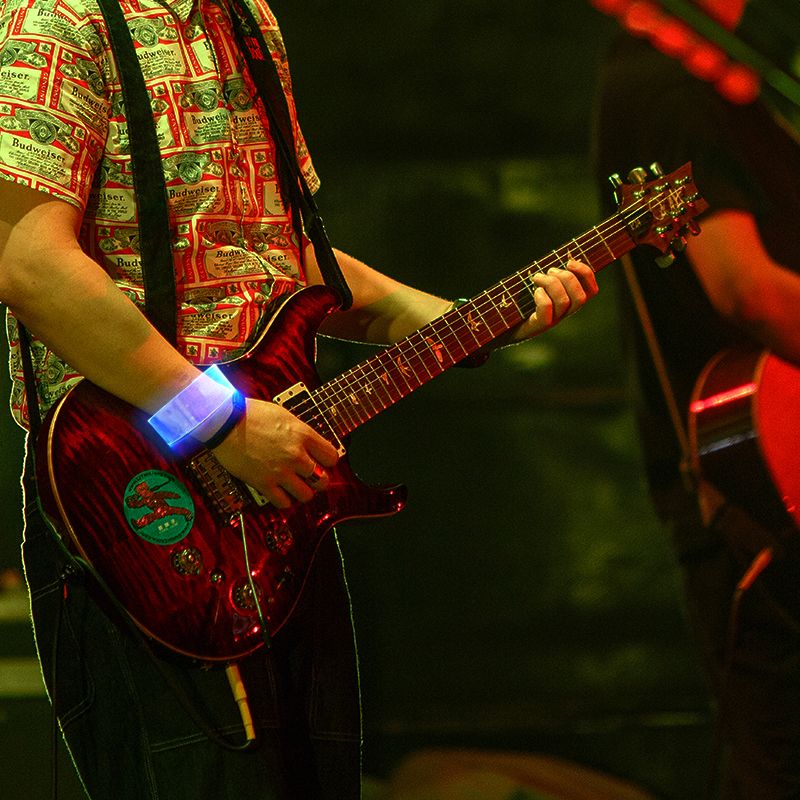
Most LED wristband pages assume a production: a controller, an operator, a lighting desk and someone who knows how to use all three. Most events have none of that. These are the bands for those events — they light up on their own, and the only thing anyone has to do is hand them out.
Two ways to light up without an operator
Sound activated
Glow and flashing
How it works
A microphone in the band reacts to the music around it
A fixed pattern the band runs by itself
Looks synchronised?
Yes, because every band hears the same bass
No, and it does not try to
Best at
Clubs, concerts, anywhere with real music
Parades, night runs, giveaways, anywhere without
Cost
A little more
The cheapest LED band we sell
Sound activation is not true synchronisation — on a quiet passage the crowd breaks up. But from the floor, a few thousand bands pulsing on the same bass line reads as a light show, with no controller, no operator and no transmitter planning.
When to use these instead of the controlled range
Ask who is running it. A school ball, a charity run, a wedding or a corporate summer party has nobody whose job is the crowd lighting, and a controller in a drawer is worse than no controller at all. A festival with a lighting team is the opposite case, and there the remote controlled RF and DMX bands give control that sound activation cannot.
Colour
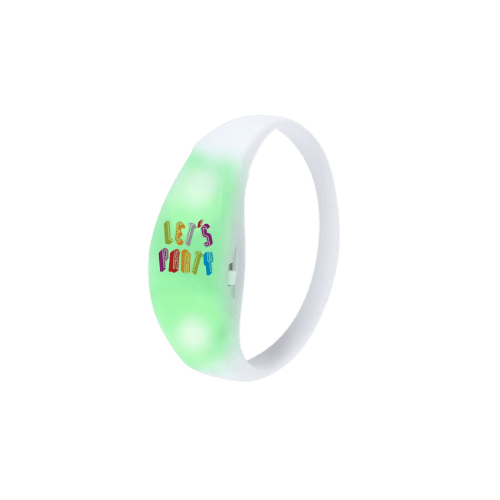
Single-colour models can be matched to a brand colour in the LED itself. Multicolour and flashing models cycle through fixed colours, so on those the brand lives in the printed strap rather than in the light. If a whole crowd must be one exact colour on cue, that is a controllable-band requirement, not this one.
Power: replaceable button cell, one event evening per cell
Printing: logo on the strap or the module
Minimum order: from 100 pieces
Lead time: about 3-4 weeks from approved artwork
Common questions
What is the difference between sound activated and flashing?
A sound activated band contains a microphone and reacts to the music around it — bass hits make it pulse, so a crowd looks synchronised without anything actually synchronising them. A flashing band runs its own fixed pattern regardless of what is playing. Sound activated looks far better in a club or at a concert; flashing is cheaper and fine for a parade or a run.
Why choose these over remote controlled bands?
Because there is nobody to run them. A remote controlled system needs a controller, an operator and transmitter coverage across the venue — that is right for a production with a lighting team and wrong for a school ball, a charity run or a corporate summer party. These need none of it: you hand them out and they work.
Do they look synchronised?
Sound activated bands do, in practice, because they are all reacting to the same music. It is not true synchronisation — you will see it break up on quiet passages — but from the floor a crowd pulsing on the bass reads as a light show, at a fraction of the cost and none of the technical setup.
How long does the battery last?
A button cell covers an event evening, and the cells are replaceable rather than sealed in, so the bands survive into a second use if you collect them. Sound activated models drain slightly faster than steady glow, because the microphone circuit is always listening.
Can we have our brand colour?
On single-colour models, yes — the LED is chosen to match. Multicolour and flashing models cycle through fixed colours, so brand colour lives in the printed strap rather than in the light. For precise colour across a whole crowd you need the controllable models instead.
What is the minimum order?
From 100 pieces, about three to four weeks from approved artwork. There are no accessories to budget for, which is part of the appeal.