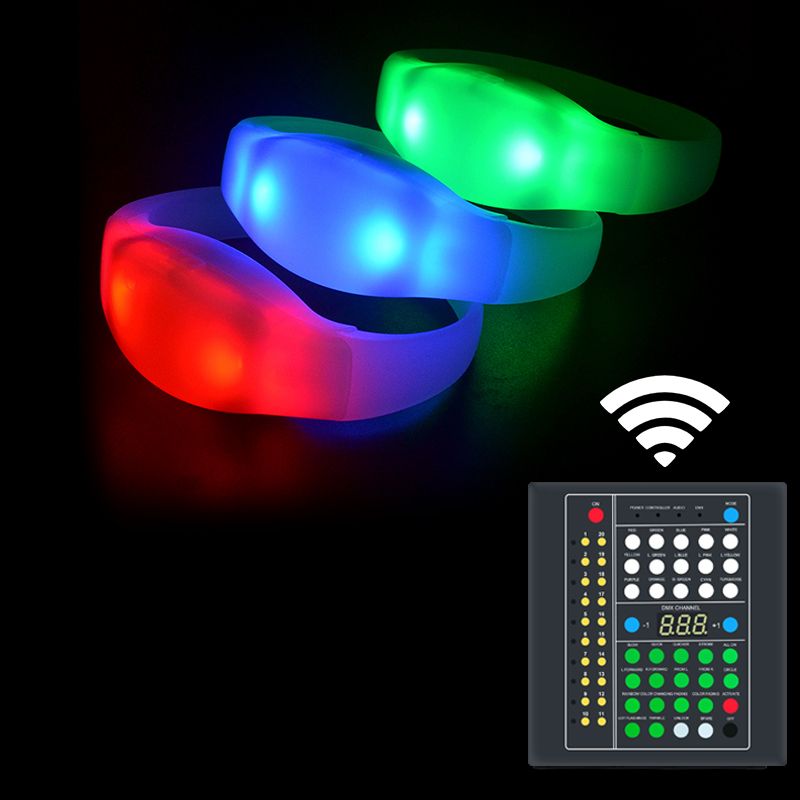
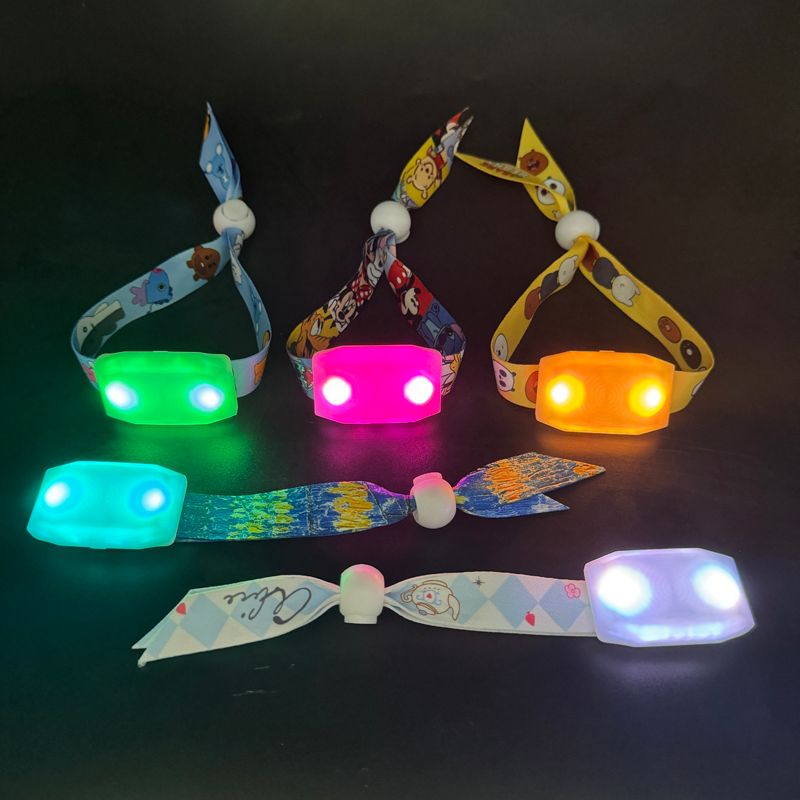
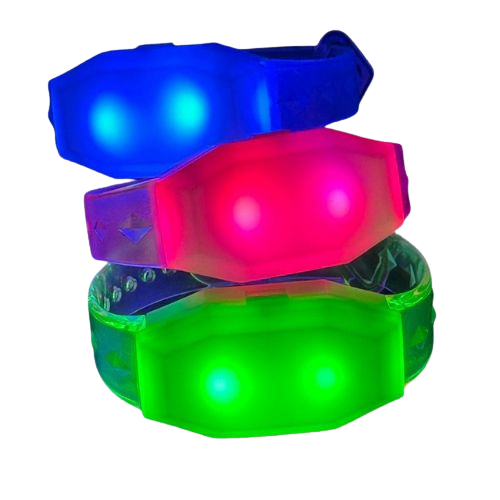
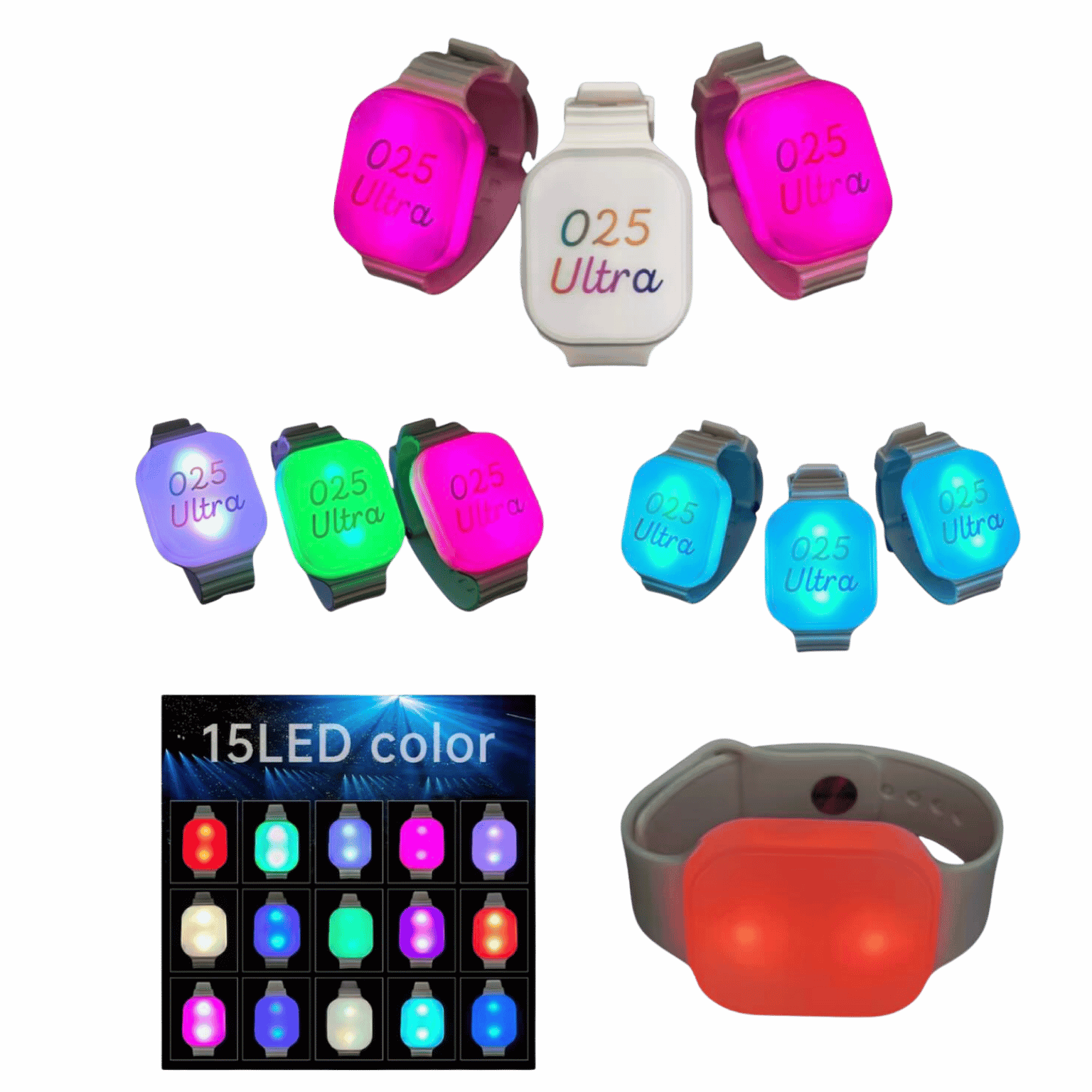
Kauko-ohjattava LED-rannekoru muuttaa yleisön valaistuslaitteeksi. Yksi operaattori, yksi ohjainlaite, ja kaikki paikalla olevat rannekorut vaihtavat väriä samassa tahdissa — juuri siksi niitä käytetään stadionkonserteissa, areenakiertueilla ja yritystapahtumissa, joissa yleisö itsessään on osa esitystä.
Kaikki alla esitellyt mallit perustuvat samaan ohjausalustaan. Eroja on rannekkeessa: sen painossa, kirkkaudessa, kiinnitystavassa ja logojen määrässä.
| Tyyli | Mitä se on | Valitse tämä, kun |
|---|---|---|
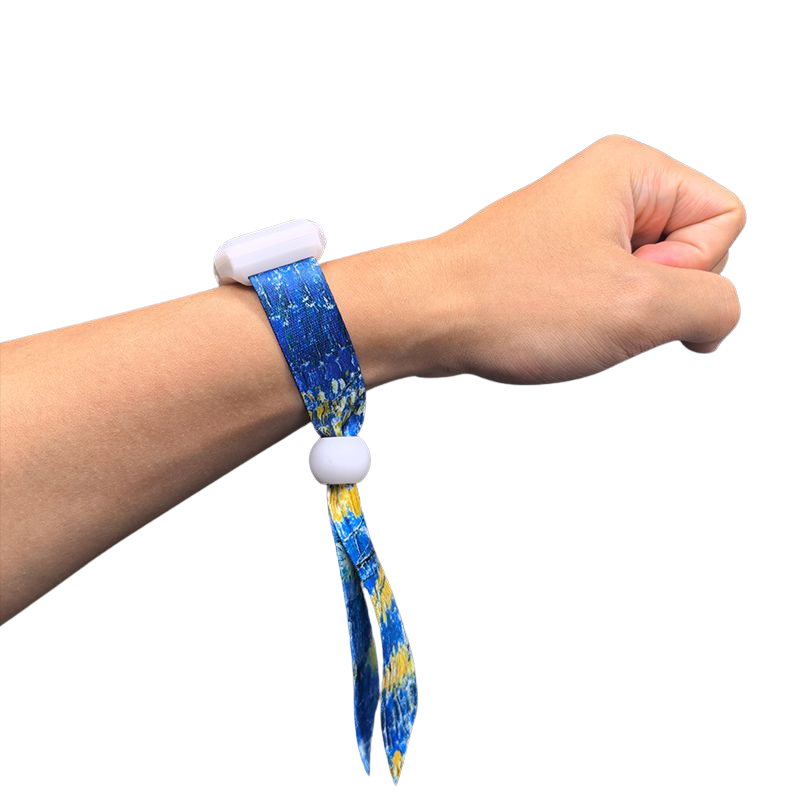
| Kangas | Kudottu tekstiilihihna, johon on integroitu LED-moduuli | Rannekkeen tulisi tuntua laadukkaalta, ja se tulisi säilyttää tapahtuman jälkeen. Yritystapahtumat ja korkeatasoiset tilaisuudet. |
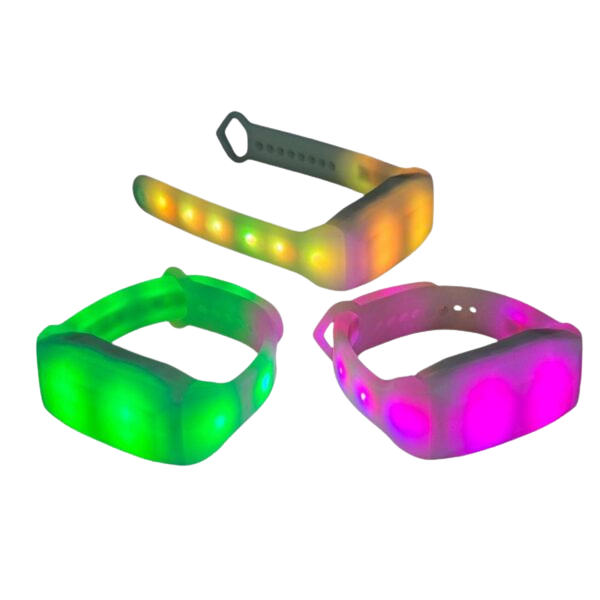
| Silikoni | Vakiomalli. Pehmeä, kestävä, sarjan edullisin | Yleinen käyttö festivaaleilla ja konserteissa äänekkäästi. |
| Nailonnyöri | Säädettävä nauhakiinnitys, rento festivaalilook | Ulkofestivaalit ja yöjuoksut, joissa kevyt nauha on parempi kuin muovattu. |
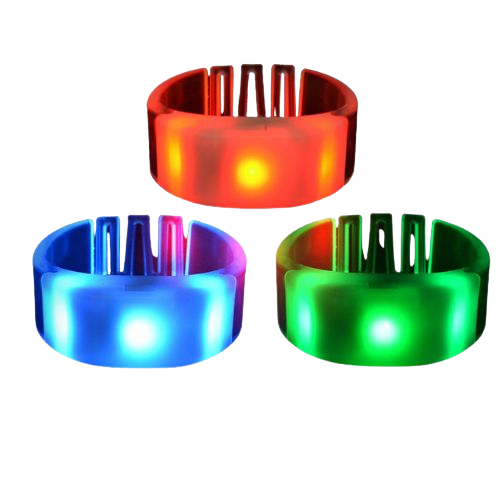
| Jäykkä, läpikuultava PVC | Kaareva kuori, jossa on lukkiutuva kiinnitys; valo leviää koko nauhan läpi | Yritysten VIP-alueet ja tuotelanseeraukset. Valossa kauneimmillaan oleva malli. |
| Stadion, 11 LED-valoa | 11 LEDin ryhmä AAA-paristolla | Areena ja stadionit. Tavalliset nappiparistokäyttöiset valonauhat eivät ole riittävän kirkkaita ylemmille katsomokerroksille. |
| Kevyt | Ohut ABS-kotelo ja kapea silikonihihna | Usean päivän festivaalit. Paino on se syy, miksi ihmiset jättävät bändin pois. |
| Kellomainen | Ylisuuri litteä kotelo, 30 g, ABS-muovia ja lääketieteellistä silikonia | Kun logolla on suurin merkitys — tämä on selvästi suurin tasainen painopinta tässä. |
RF 2,4 GHz on yksinkertaisempi tapa: kädessä pidettävä tai pöydälle asetettava ohjain aktivoi värit ja kuviot suoraan ilman valopöytää. DMX512 lisää yleisön osaksi olemassa olevaa esitystiedostoasi, ajoitettuna valaistuksen kanssa. Yritystapahtumissa ja keskisuurissa festivaaleissa käytetään lähes aina RF-tekniikkaa; kiertue-esityksissä taas DMX-tekniikkaa, koska yleisön on oltava aikajanalla kaiken muun kanssa.
Joka tapauksessa, ohjain on erillinen tuote ja sinä tarvitset sellaisen. Se on uudelleenkäytettävä eri tapahtumissa, joten kyseessä on kertaluonteinen kustannus eikä bändikohtainen. Suuren tapahtumapaikan kantamaa laajennetaan lisäämällä lähettimiä sen sijaan, että äänenvoimakkuutta nostettaisiin — näiden sijoittelun suunnittelu on se asia, joka menee useimmiten pieleen ensimmäisellä kerralla, joten teemme sen yhdessä kanssasi jo tarjousvaiheessa.
Jokainen malli vaihtaa reaaliaikaisesti 15 dynaamisen värimoodin välillä. Käytännössä esityksessä käytetään kolmea tai neljää: saliväriä, kuoroväriä, stroboskooppia ja pimennystä. Jos ohjelmoidaan enemmän kuin tämä, se näyttää katsomosta katsottuna pikemminkin sekavalta kuin vaikuttavalta.
Nappiparisto riittää mainiosti yhden tapahtumaillan tarpeisiin. Stadionmallissa käytetään AAA-paristoja, koska yksitoista LED-valoa vaatii lisää kapasiteettia. Jos kyseessä on useamman päivän tapahtuma tai kiertue, ladattavat LED-rannekkeet on oikea tuote — paristojen vaihtaminen viidessä tuhannessa nauhassa on työ, jota kukaan ei tee kahdesti.
Jos operaattoria tai valopöytää ei ole, ääniaktivoituvat nauhat suorittaa samanlaisen tehtävän itsenäisesti reagoimalla musiikkiin.
Kyllä. Rannekkeet eivät voi synkronoitua keskenään itsestään – ohjain on se, joka yhdistää tuhat erillistä ranneketta yhdeksi esitykseksi. Ohjain hankitaan erikseen, ja sitä voidaan käyttää uudelleen eri tapahtumissa, joten kyseessä on kertaluonteinen kustannus eikä ranneketta kohden laskettava kustannus. Ilman ohjainta voit tilata sen sijaan ääniaktivoituja tai vilkkuvia rannekkeita, jotka eivät vaadi lainkaan käyttäjää.
2,4 GHz:n radiotaajuus on yksinkertaisempi vaihtoehto: kädessä pidettävä tai pöydälle asetettava ohjain aktivoi värit ja kuviot suoraan ilman valopöytää. DMX512-protokollan avulla rannekkeet integroidaan olemassa olevaan valaistusjärjestelmään, jolloin yleisö toimii yhtenä valaistuksen ohella ohjattavana elementtinä esitystiedostossa. Yritystapahtumissa ja keskisuurissa festivaaleissa käytetään radiotaajuutta; kiertueilla puolestaan DMX-protokollaa.
Aloitetaan tapahtumapaikasta. Stadionilla tarvitaan 11-LED-mallia, koska tavalliset nappiparistoilla toimivat rannekkeet eivät ole riittävän kirkkaita, jotta niitä voisi lukea ylemmiltä katsomokerroksilta. Useamman päivän festivaalilla tarvitaan kevyttä mallia, koska paino on se tekijä, joka saa ihmiset ottamaan rannekkeen pois. Yritysten VIP-alueelle sopii jäykkä, läpikuultava PVC-ranneke, joka hajottaa valon koko rannekkeen läpi. Jos logo on tärkeämpi kuin mikään muu, kellotyyppisessä kotelossa on ylivoimaisesti suurin tasainen painopinta.
Ohjain kattaa tyypillisen tapahtumapaikan, ja kantamaa laajennetaan lisäämällä lähettimiä sen sijaan, että lisättäisiin tehoa kullakin taajuusalueella. Areenoiden ja stadionien osalta suunnittelemme lähettimien sijoittelun yhdessä kanssanne tarjousvaiheessa — juuri tämä on se asia, joka menee useimmiten pieleen ensimmäisessä tilauksessa.
Nappiparisto riittää mukavasti koko tapahtumaillan ajaksi; AAA-stadionmalli kestää pidempään, koska siinä on enemmän kapasiteettia useampien LED-valojen käyttöön. Monipäiväisissä tapahtumissa tai kiertueilla oikea valinta ovat ladattavat LED-rannekkeet — paristojen vaihtaminen viidestä tuhannesta rannekkeesta ei ole tehtävä, jota kukaan haluaisi tehdä kahdesti.
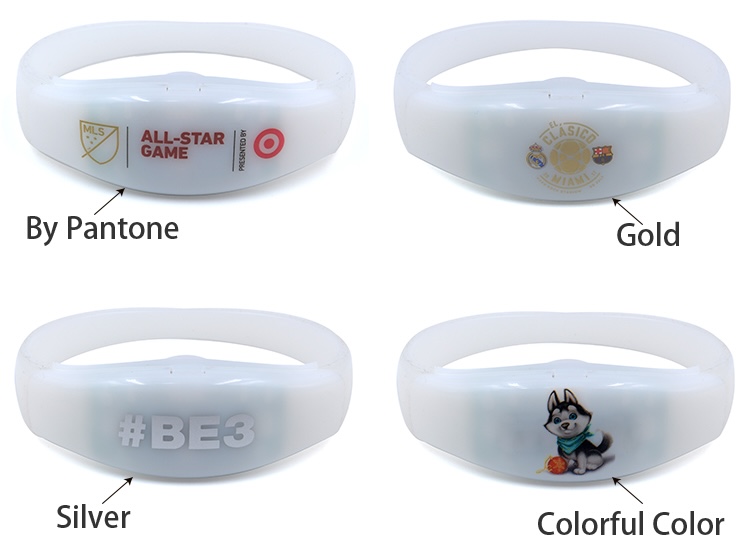
Kyllä, kaikissa malleissa. Kellomallisessa moduulissa on suurin tasainen pinta-ala, ja se toistaa yksityiskohtaiset logot parhaiten; kangas- ja nailonhihnoissa painatus on suoraan hihnassa. Muista, että hihna näkyy sekä valaistuksessa että pimeässä, joten kontrastikas logo toimii huomattavasti paremmin kuin hillitty logo.
100 kappaleesta alkaen toimitusaika on noin kolme–neljä viikkoa hyväksytyn kuvamateriaalin jälkeen. Ohjaimella ei ole vähimmäistilausmäärää, ja sitä tilataan yleensä yksi tai kaksi kappaletta kutakin tapahtumapaikkaa kohti.
Kauko-ohjattavat LED-rannekkeet synkronoidun esityksen, ladattavat LED-rannekkeet monipäiväiseen käyttöön ja retkeilyyn, ääniaktivoituvat ja vilkkuvat nauhat kun operaattoria ei ole, ja RF- ja DMX-ohjaimet jotka heitä ohjaavat. Lisäksi: LED-kaulanauhat, kauko-ohjattavat LED-kaulakorut, valotikkuja, LED-kupit ja kaikki muut valot.
EU-pohjainen tuotantomme varmistaa, että vastaamme tiukimpiinkin tapahtuma-aikatauluihin.

Jokainen tuote luodaan erityisesti vastaamaan ainutlaatuisia tapahtumatarpeitasi ja brändiohjeita.

Saatavilla on kestäviä materiaaleja, kuten kierrätettyjä ja biohajoavia rannekkeita.





Hankkeemme