
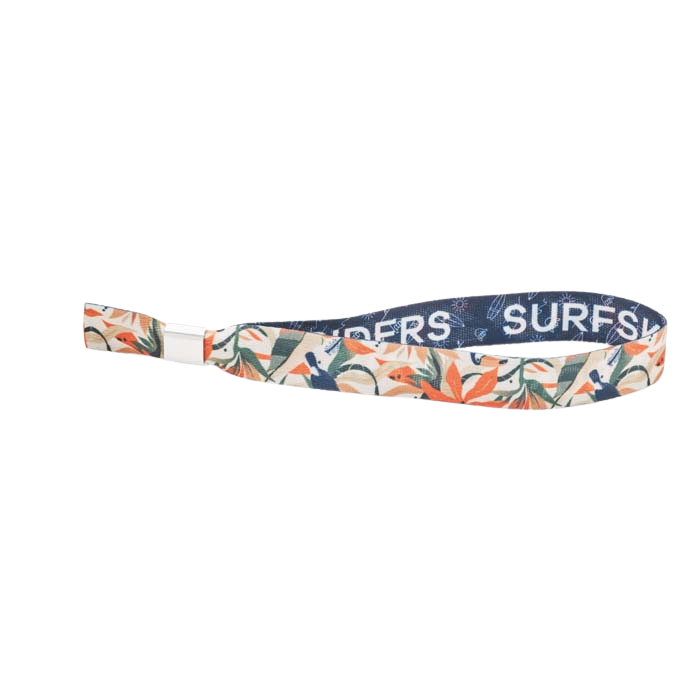
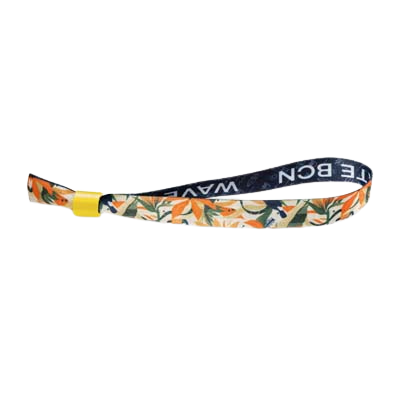
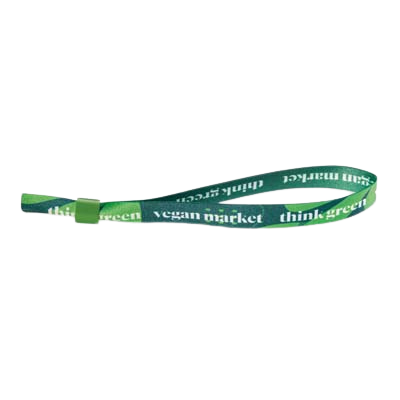
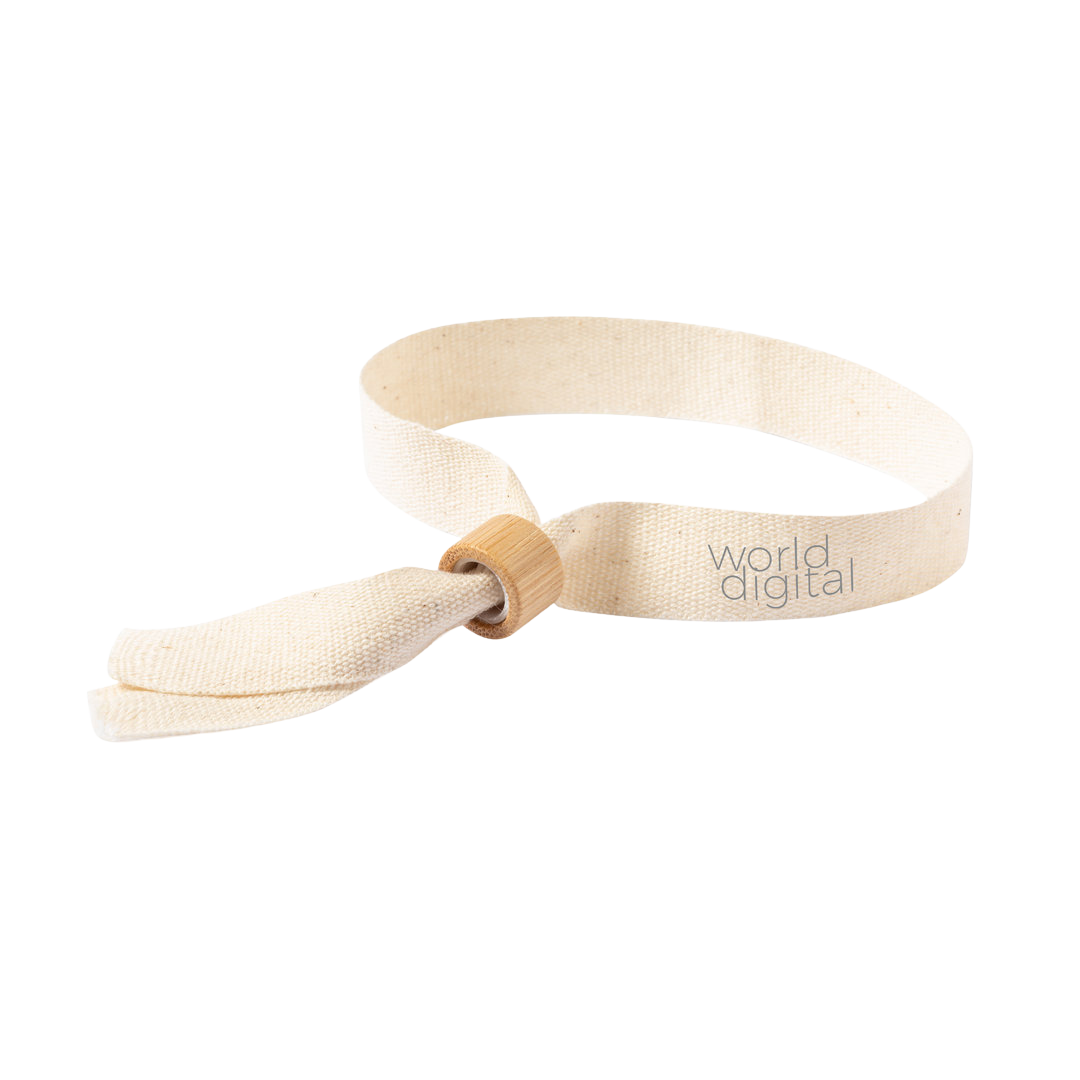
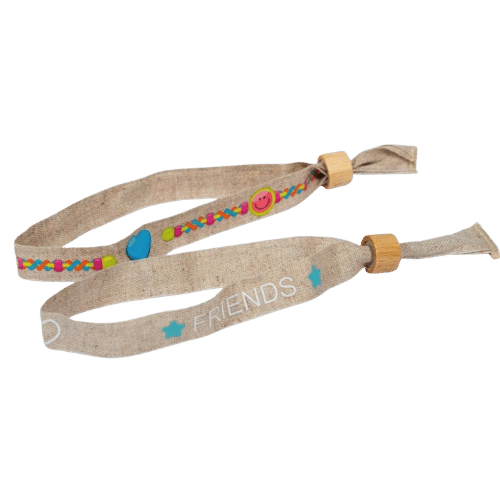
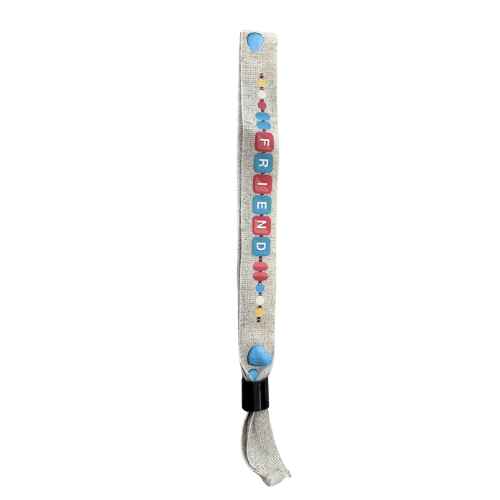
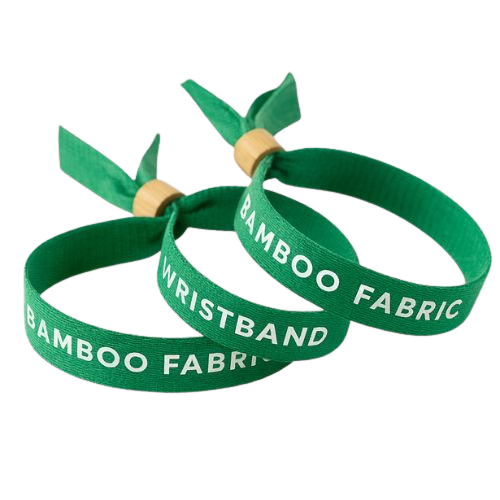
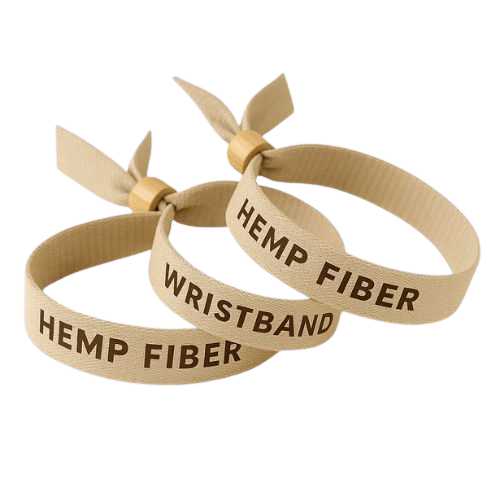
As pulseiras ecológicas respondem a duas questões diferentes, e é ao confundir essas duas questões que as alegações de sustentabilidade são postas em causa. Reciclado rPET resposta é “utilizar menos material novo” — continua a ser poliéster, fiado a partir de garrafas usadas, e apresenta um aspeto e um conforto idênticos aos da fita padrão, por um pequeno custo adicional. O quatro fibras naturais Resposta a outra questão: o próprio objeto não deve ser de plástico e deve ser visivelmente diferente.
| Fibra | Como é | De |
|---|---|---|
| Reciclado rPET | Na utilização, é impossível distingui-lo do poliéster normal. Fio fiado a partir de garrafas pós-consumo certificadas. | 0,59 EUR |
| Algodão biológico | Mate, rústico, respirável e hipoalergénico. O mais claramente natural dos cinco. | 0,89 EUR |
| Linho | Tecido ligeiramente irregular, fresco ao toque, com um carácter visível. O linho é uma das culturas mais antigas e menos exigentes. | 0,99 EUR |
| Bambu | Sedoso, com capacidade de absorção da humidade e naturalmente antibacteriano. A fita mais confortável para usar durante uma semana em clima quente. | 1,19 EUR |
| Cânhamo | Estruturada, granular e a fibra natural mais resistente da gama. Dá a sensação de ter sido feita à mão. | 1,39 EUR |
A diferença de preço entre o mais barato e o mais caro é de cerca de duas vezes e meia, o que, numa encomenda de dez mil unidades, constitui uma decisão orçamental e não um pormenor.
Todos os cinco admitem sublimação de tinta, mas a cor comporta-se de forma diferente num tecido natural do que num poliéster branco liso: fica com um tom mais suave e ligeiramente mais quente. Trata-se de uma consideração de design, não de um defeito. As imagens com elevado contraste ficam lindas em algodão e cânhamo; um logótipo claro desaparece. É possível tecer até quatro cores em toda a gama, mantendo melhor a definição nas fibras mais grossas.
Uma pulseira de algodão fechada com um fecho de plástico padrão de uso único não é uma pulseira sem plástico, e esse é o primeiro pormenor que qualquer pessoa que a verifique irá apontar. A crimpagem metálica é mais seguro, tem melhor aspeto e mantém a afirmação coerente. Custa um pouco mais por faixa e é a diferença entre uma afirmação que resiste a um exame minucioso e outra que não resiste.
Para materiais que não são, de todo, tecido, consulte pulseiras de cortiça e pulseiras de papel com sementes que podem ser plantadas.
Comece pela diferença de preço. O rPET é o mais barato e a escolha mais fácil: tem o mesmo aspeto e o mesmo toque que o poliéster normal, mas é fiado a partir de garrafas recicladas. O algodão biológico é macio, mate e inconfundivelmente natural. O bambu é o mais confortável dos cinco e é naturalmente antibacteriano, o que é importante para uma semana em clima quente. O linho é o que tem o carácter mais marcante. O cânhamo é o mais resistente, ideal para atividades ao ar livre e de aventura.
Não, e vale a pena ser preciso porque alguém vai perguntar. O rPET é plástico reciclado — reduz o desperdício, mas o material continua a ser poliéster. O algodão, o bambu, o linho e o cânhamo são fibras vegetais biodegradáveis. Se a alegação for “sem plástico”, apenas estas quatro fibras naturais se qualificam; se for “conteúdo reciclado”, o rPET é o único que conta com uma cadeia de abastecimento certificada.
Sim, com uma ressalva. O cânhamo e o algodão aguentam uma semana de uso contínuo, incluindo contacto com água, sem qualquer dificuldade. O linho e o bambu também, embora o bambu amoleça visivelmente com o uso, o que a maioria das pessoas interpreta como conforto e não como desgaste. As fibras naturais mostram sinais de desgaste de forma mais visível do que o poliéster — uma troca justa pela sua aparência e toque.
Todos os cinco permitem a impressão por sublimação, mas as cores ficam mais suaves sobre um fundo com textura natural do que sobre poliéster branco liso. Tenha isso em conta ao criar o design: um logótipo de alto contraste fica muito bem em algodão ou cânhamo, enquanto um logótipo de cores claras passa despercebido. É possível tecer até quatro cores em todos eles, e o resultado mantém-se melhor nas fibras mais grossas.
Diferenças significativas em toda a gama: o rPET começa por cerca de 0,59 euros, o algodão biológico por cerca de 0,89, o linho por cerca de 0,99, o bambu por cerca de 1,19 e o cânhamo por cerca de 1,39. Trata-se de uma diferença que pode chegar a duas vezes e meia, pelo que, numa encomenda de dez mil peças para um festival, a escolha da fibra é uma verdadeira decisão orçamental, e não apenas um pormenor.
Sim, podem. Uma fita de algodão com um fecho de plástico padrão de abertura única não é isenta de plástico, e é a primeira coisa que qualquer pessoa que analise essa afirmação irá notar. Peça, em vez disso, um fecho de metal — é mais seguro, tem melhor aspeto e mantém a afirmação intacta.
A partir de 100 unidades, em todas as cinco fibras, com um prazo de cerca de duas a três semanas a contar da aprovação do material gráfico.
Tecido: impresso, tecido, fibras ecológicas e recicladas, numerados. Silicone: em relevo negativo, em relevo, serigrafado, larguras e efeitos de cor, com uma placa metálica. Outros materiais: Tyvek, vinil, Couro PU, cortiça, papel com sementes plantável. Com componentes eletrónicos: RFID e NFC, Pulseiras LED com controlo remoto, RF e DMX. A gama completa: Pulseiras.

Nossas produções baseadas na UE significam que cumprimos até mesmo os prazos mais apertados dos eventos.

Cada produto é criado especificamente para atender às necessidades exclusivas do seu evento e às diretrizes da sua marca.

Materiais sustentáveis estão disponíveis, incluindo pulseiras recicladas e biodegradáveis.








Os nossos projetos