Felt does two unrelated jobs well, and both of them are usually done badly by something disposable. It replaces the thin single-use hotel slipper, and it replaces the plastic shoe cover that tears at the door of a heritage building.
Plastic covers tear, slip on polished stone and end up as litter around the entrance. Heavy felt spreads the load, does not scratch parquet, and is silent — which in a gallery or a historic interior matters more than anyone expects until they have heard fifty pairs of plastic covers crossing a wooden floor.
Branding, and how much is too much
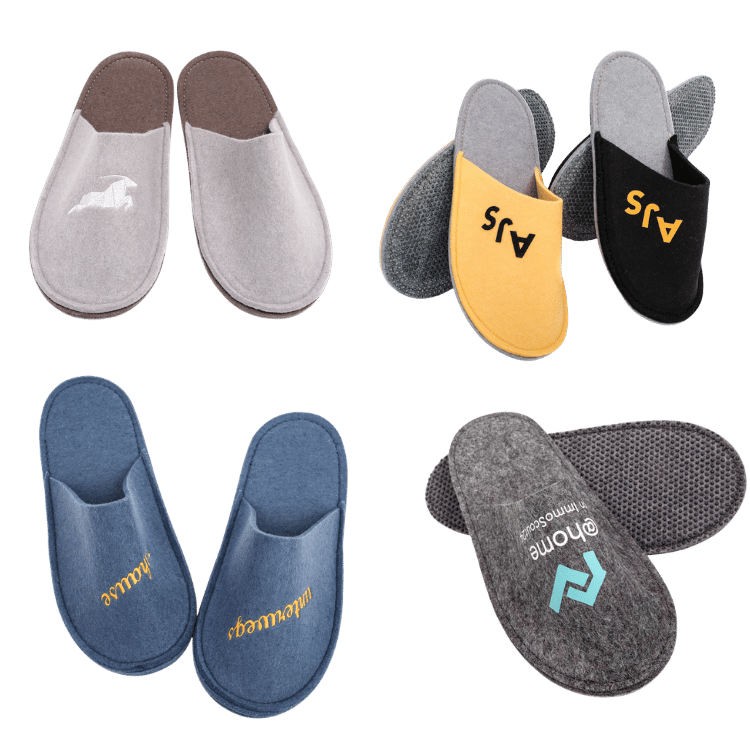
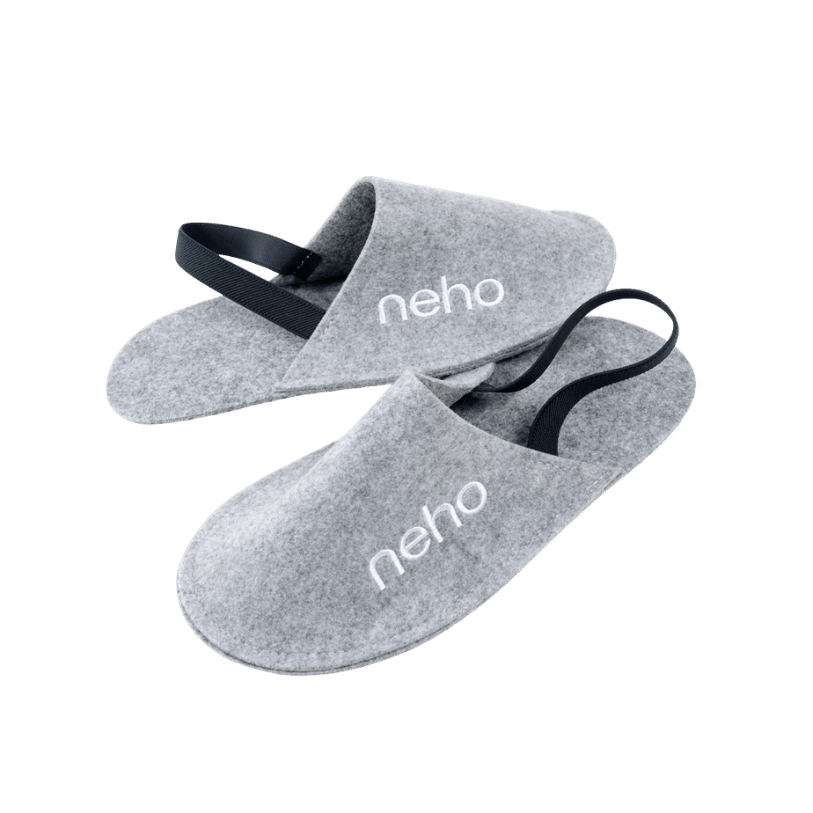
Embroidery is permanent, understated and suits the material. Print gives larger and more visible artwork. In hospitality, small and embroidered is nearly always right: a large printed logo on a slipper in a room someone is paying for reads as advertising rather than as service.
Specifications
Types: guest slippers, or protective overshoes
Material: wool felt
Branding: embroidery or print
Sizing: a small size range covers most adults; overshoes are cut generously
Minimum order: from 100 pairs
Lead time: about 3 weeks from approved artwork
Common questions
What is the difference between the two?
The guest slipper is footwear: worn on a bare foot, comfortable, taken home. The overshoe goes on over a shoe, is heavier, and exists to keep a floor intact. Same material, opposite purposes — and a guest slipper used as an overshoe wears out in a week.
Why felt instead of disposable slippers?
A disposable pair is worn once and binned, which is both a waste line and a guest experience that says the room is temporary. A wool felt pair is comfortable, quiet on hard floors, washable, and taken home — so it keeps the brand in someone home rather than in a bin.
Do the overshoes actually protect a floor?
Yes, and better than plastic covers, which tear, slip on polished stone and end up as litter around the entrance. Heavy felt spreads the load, does not scratch, and is quiet — which matters more than expected in a gallery or a heritage interior.
How do you brand felt?
Embroidery for a permanent, understated mark that suits the material, or print for larger and more visible artwork. In hospitality, small and embroidered is nearly always the right call — a large printed logo on a guest slipper reads as advertising in a room someone is paying for.
How are they sized?
Guest slippers are supplied in a small number of sizes covering most adults, which is how hotels stock them without a size problem at the door. Overshoes are generously cut to go over a shoe, so a smaller size range covers a wider range of feet.