
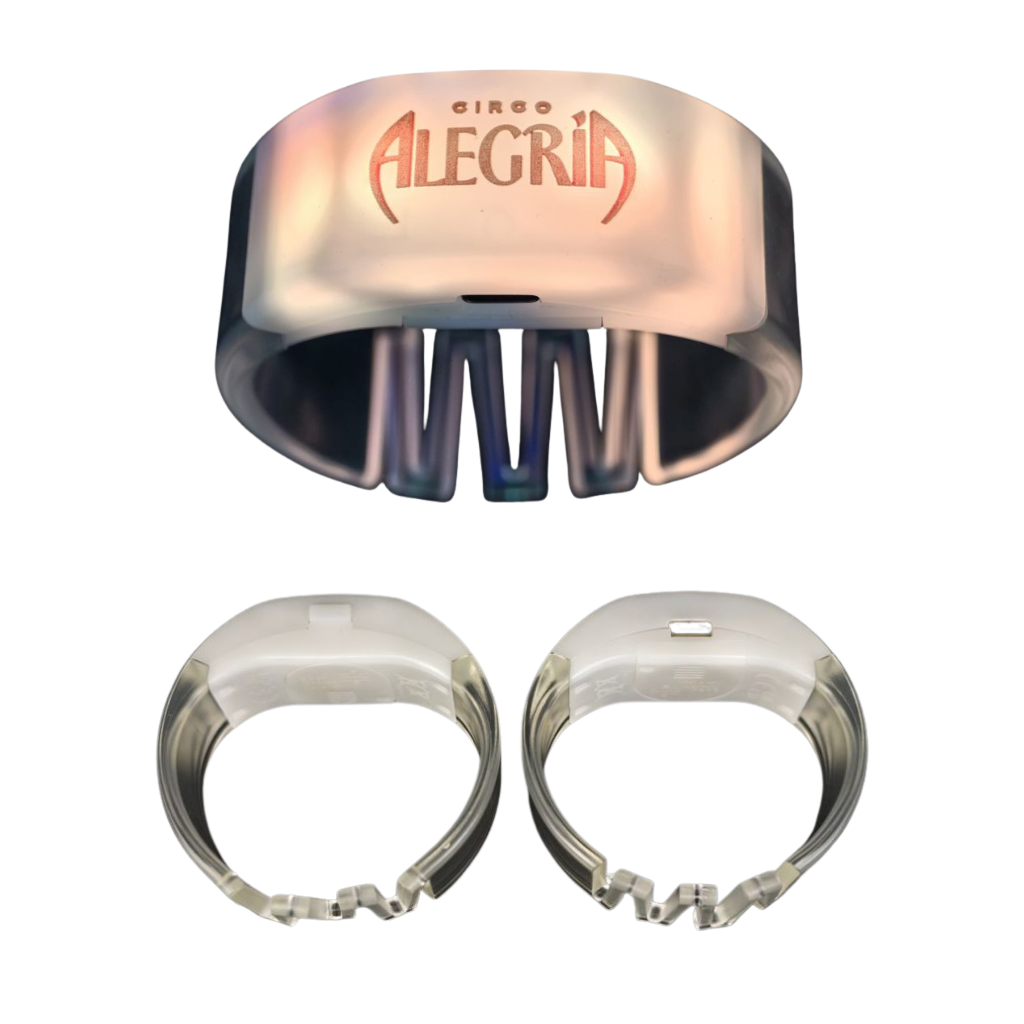
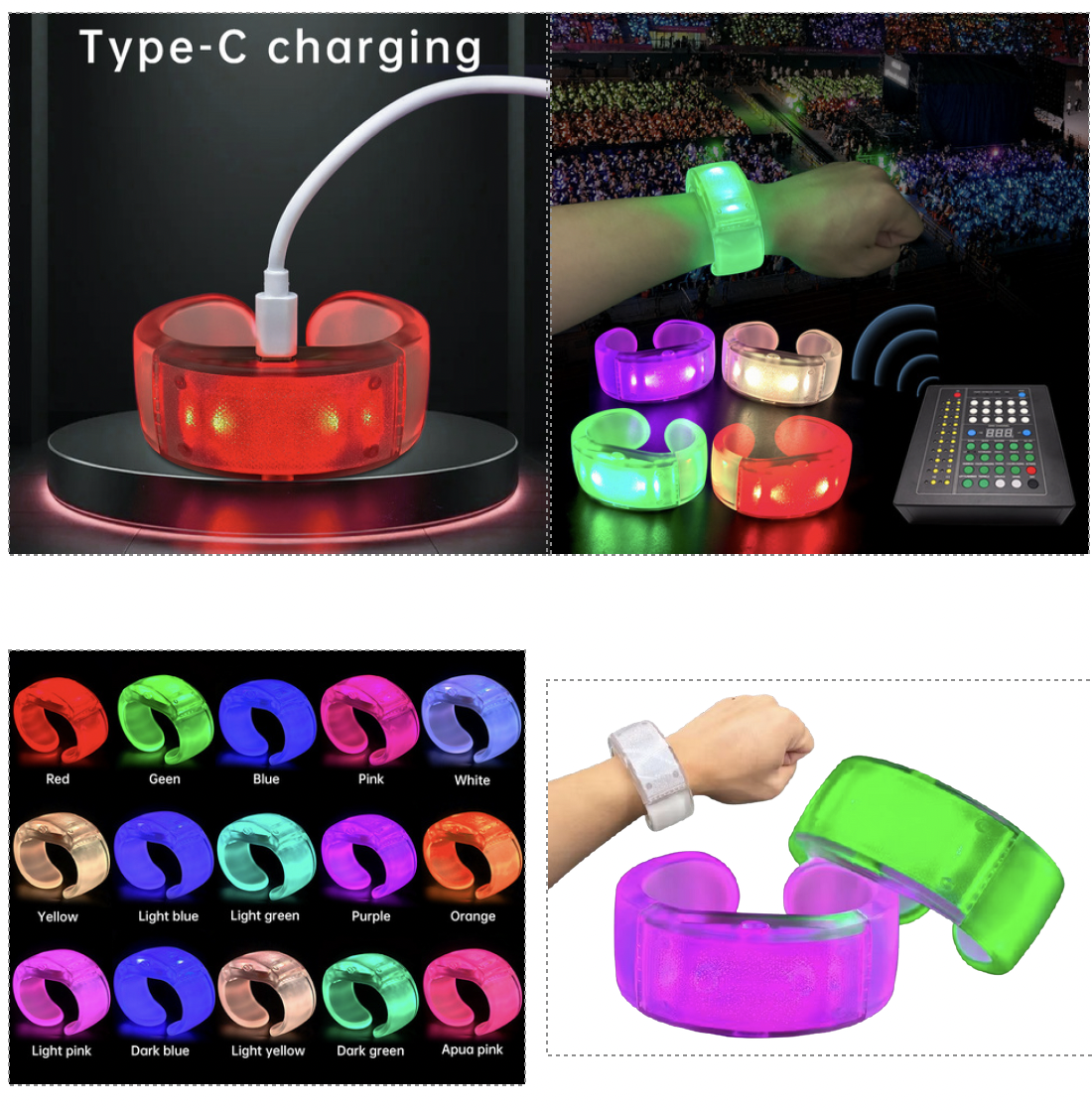
Un bracelet à pile LED est un consommable. Un bracelet rechargeable, en revanche, est considéré comme du matériel — et cette simple différence change complètement la donne dès lors que vous organisez plusieurs événements.
Rechargez le USB-C, utilisez-le, puis rechargez-le à nouveau. Aucune pile n’est à remplacer sur les cinq mille bandes, il n’y a aucun déchet à éliminer, et dès le deuxième spectacle, le prix unitaire plus élevé est déjà rentabilisé.
| Modèles de batteries | Rechargeable | |
|---|---|---|
| Puissance | Pile bouton ou AAA, remplacée | Cellule interne, chargée via USB-C |
| Couleurs | 15 modes préréglés | 256 couleurs avec une intégration logicielle complète |
| Contrôle | RF et DMX | DMX512, RF 2,4 GHz et application |
| Réutilisation | Pratiquement un événement isolé | Flotte, utilisée pendant une saison ou une tournée |
| Logique des coûts | Par événement | Par flotte, en baisse à chaque spectacle |
Les bracelets, c'est la partie la plus simple. Ce qui détermine si un parc de bracelets rechargeables vous convient, c'est le cycle de recharge nocturne : les bracelets sont retirés des poignets des participants, placés par lots dans des étuis de recharge, puis remis en circulation le lendemain. Nous proposons les étuis en même temps que les bracelets, et non après, car un parc sans plan de recharge se transforme dès le deuxième jour en une pièce remplie de bracelets déchargés.
Depuis la salle d’un festival, la foule apparaît comme une couleur unique à la fois ; une large palette de couleurs est donc pratiquement invisible. Dans le cadre d’une activation de marque, c’est justement là tout l’intérêt : la différence entre, disons, votre « bleu » et votre « Pantone » réel, reproduit à travers dix mille points lumineux. Choisissez la spécification à laquelle vous souhaitez vous conformer parmi ces deux options.
Si l'événement ne dure qu'une seule soirée et que les groupes ne reviendront pas, le modèles RF et DMX fonctionnant sur batterie coûteront moins de la moitié du prix et feront tout aussi bien l'affaire pour cette soirée-là.
Lorsque les bracelets sont utilisés plusieurs fois. Un bracelet à piles est un consommable : chaque concert nécessite un nouveau lot, sinon quelqu’un passe une journée entière à remplacer cinq mille piles. Un bracelet rechargeable est un équipement : on le recharge, on l’utilise, puis on le recharge à nouveau. Dès le deuxième événement, il a déjà amorti la différence de prix, et lors d’une tournée, la différence est encore plus flagrante.
Trois points. La source d’alimentation est une batterie interne rechargée via le USB-C. La palette de couleurs comprend 256 couleurs avec une intégration logicielle complète, plutôt que 15 modes préréglés, ce qui permet de créer des dégradés et de reproduire avec précision les couleurs de marque. Et le contrôle via l’application est disponible en plus du DMX et de la radiofréquence (RF), ce qui est important pour les petites productions ne disposant pas de console d’éclairage.
Dans le cas des caisses de recharge pouvant contenir un lot à la fois, ce qui correspond à la pratique des tournées — les groupes quittent la scène, sont rangés dans les caisses pour la nuit et remontent sur scène le lendemain. Nous indiquons le prix des caisses en même temps que celui des groupes, car c’est la logistique de la recharge qui détermine si une flotte d’instruments rechargeables est réellement adaptée à vos besoins.
Pour un festival, ce n’est pas grand-chose : vu du sol, la foule n’apparaît que comme une succession de couleurs. Pour une campagne de promotion de marque, en revanche, cela a une grande importance, car cela fait toute la différence entre “ à peu près votre bleu ” et votre véritable Pantone, à travers dix mille points lumineux.
Pour le DMX, oui — les deux font partie du même univers ; une flotte principale rechargeable complétée par des batteries supplémentaires en cas de besoin est donc une configuration courante. La correspondance des couleurs entre les deux n'est qu'approximative ; il est donc préférable de les répartir dans des zones distinctes plutôt que de les mélanger au sein d'un même bloc de sièges.
À partir de 100 pièces, il faut compter environ trois à quatre semaines à compter de la validation du visuel. Comme ces articles sont réutilisables, la plupart des acheteurs commandent un lot complet une seule fois, puis le complètent au fur et à mesure, plutôt que de passer une nouvelle commande à chaque événement.
Bracelets LED à commande à distance pour un spectacle synchronisé, bracelets rechargeables LED pour les sorties de plusieurs jours et le cyclotourisme, bandes clignotantes et activées par le son lorsqu'il n'y a pas d'opérateur, et le Contrôleurs RF et DMX qui les motivent. Par ailleurs : Cordons LED, bâtons lumineux, Verres à LED et tout ce qui s'allume d'autre.
Nos productions basées dans l'UE nous permettent de respecter les délais d'événements les plus serrés.

Chaque produit est créé spécifiquement pour répondre aux besoins uniques de votre événement et à votre charte graphique.

Des matériaux durables sont disponibles, notamment des bracelets recyclés et biodégradables.









Nos projets